

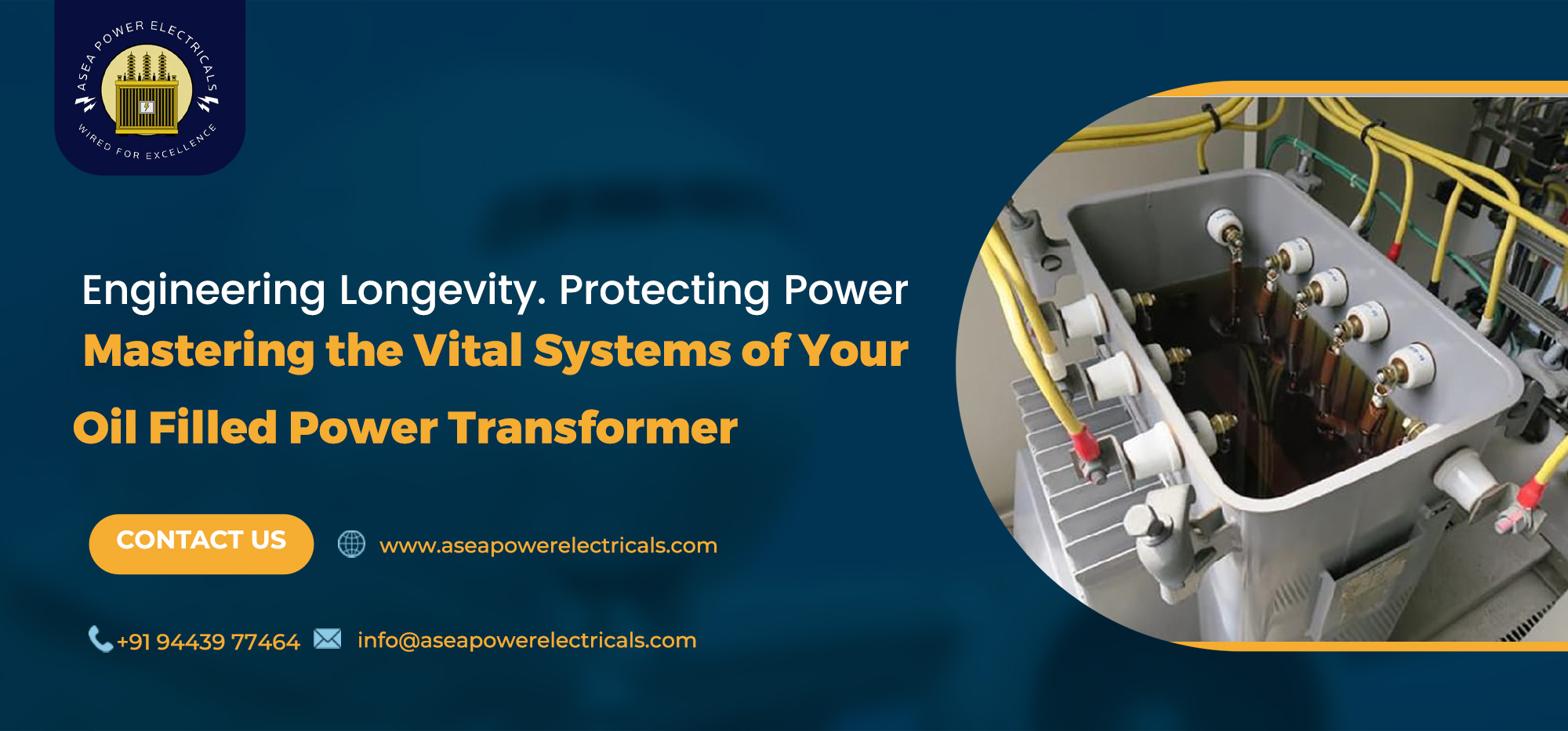
In the world of high-voltage engineering, an oil filled power transformer is often viewed as a static, solid object. In reality, it "breathes." As the electrical load fluctuates, the internal temperature of the transformer rises and falls, causing the insulating oil to expand and contract. Without a sophisticated system to manage this movement, the internal pressure could lead to tank rupture or, more dangerously, the intake of atmospheric moisture.
At Asea Power Electrical, we specialize in the design and maintenance of these critical systems. Understanding the "respiratory system" of your transformer—the conservator tank and the silica gel breather—is the first step toward ensuring the longevity of your power infrastructure.
The Role of the Conservator Tank: The Expansion Reservoir
The primary function of the conservator tank in an oil filled power transformer is to provide adequate space for oil expansion. When the transformer is under heavy load, the oil heats up and its volume increases. This excess oil flows into the conservator tank, which is mounted at the top of the main transformer tank.
Without a conservator, the main tank would need to be partially empty to allow for expansion, leaving the core and windings exposed to air. By using a conservator, the main tank remains completely filled with oil at all times, ensuring that the critical insulation and cooling surfaces are never compromised.
Modern Innovations: The Air Cell (Atmosbag)
To further protect the oil, many modern oil filled power transformers by Asea Power Electrical utilize a "flexible separator" or air cell inside the conservator. This high-grade rubber bag prevents the oil from ever coming into direct contact with the atmosphere, virtually eliminating the risk of oxidation and moisture absorption.
The Silica Gel Breather: The Guardian of Purity
As the oil level in the conservator drops (when the transformer cools down), air must be drawn in from the outside. This is where the silica gel breather comes into play. Moisture is the greatest enemy of transformer oil; even a few drops of water can slash the dielectric strength of the oil by half, leading to internal arcing and catastrophic failure.
The silica gel breather acts as a powerful desiccant. As air is sucked into the transformer, it passes through the crystalline silica gel, which traps any water vapor.
- The Color Indicator: Fresh silica gel is typically blue. As it absorbs moisture and becomes saturated, it turns pink.
- The Oil Seal: At the bottom of the breather is a small oil cup. This serves as a dust filter, trapping solid particles before the air reaches the silica gel.
Why Choose Asea Power Electrical for Oil Filled Power Transformer Services?
When it comes to high-value electrical assets, experience and precision are non-negotiable. Asea Power Electrical has established itself as a leader in the field for several key reasons:
1. Advanced Thermal Management
We design our oil filled power transformers with optimized cooling circuits. By calculating precise expansion rates, we ensure that our conservator tanks are perfectly sized for the specific climate conditions of the installation site, whether in the humid coastal regions of Chennai or the tropical environments of Sri Lanka.
2. High-Purity Oil Filling Processes
The performance of a transformer depends on the quality of its initial fill. Asea Power Electrical uses high-vacuum oil purification plants to ensure that every oil filled power transformer we commission is free from dissolved gases and moisture, meeting the strictest IEC and IS standards.
3. Proactive Diagnostic Support
We don't just supply equipment; we provide a lifetime of support. From Dissolved Gas Analysis (DGA) to onsite breather rejuvenation and gasket replacements, our team ensures that your "breathing" system remains airtight and moisture-free.
4. Robust Construction for Harsh Environments
Our tanks are treated with high-grade anti-corrosive coatings and fitted with premium-quality radiators and accessories. This makes an oil filled power transformer from Asea Power Electrical exceptionally resilient against the corrosive salt air of industrial corridors.
Conclusion: Trust the Experts in Power Stability
The "breath" of a transformer is a delicate balance of physics and chemistry. By maintaining a clean conservator and a dry breather, you are protecting the very heart of your electrical grid.
Whether you are looking to purchase a new, high-efficiency oil filled power transformer or require expert maintenance for your existing fleet, Asea Power Electrical is your dedicated partner. We combine decades of engineering heritage with modern diagnostic techniques to ensure your power stays on, day and night.
Frequently Asked Questions (FAQs)
1. Why is an oil filled power transformer preferred over dry-type transformers?
For high-capacity power distribution and transmission, the oil filled power transformer remains superior due to its excellent heat dissipation properties and high dielectric strength. Oil is a more efficient cooling medium than air, allowing for a more compact design for high-voltage applications.
2. How often should the silica gel in the breather be replaced?
The interval depends on the humidity of the environment. However, you should check the color of the gel monthly. Once more than 50% of the gel has turned from blue to pink, it is time for a replacement or reactivation. Asea Power Electrical recommends a full inspection of the breather assembly during every annual maintenance cycle.
3. What happens if the conservator tank in an oil filled power transformer is under-filled?
If the oil level is too low, the Buchholz relay (a critical gas-actuated safety device) may trip, causing the transformer to shut down. In extreme cases, it could leave the top of the windings exposed, leading to localized overheating. Our team at Asea Power Electrical ensures proper oil level markings are always clear and calibrated.
4. Can an old oil filled power transformer be upgraded with a modern air cell?
Yes. Asea Power Electrical provides retrofitting services where we can install a flexible separator (air cell) in existing conservator tanks. This is a cost-effective way to modernize an older unit and significantly extend the life of the insulating oil.
5. What are the signs of a failing breather system in a transformer?
The most obvious sign is the rapid color change of the silica gel. Other red flags include oil leaks around the breather pipe, a cracked glass container, or the presence of sludge in the bottom oil cup. If you notice these, contact Asea Power Electrical immediately for a professional site audit.