

Choosing the right power distribution equipment is a critical decision for facility managers, architects, and electrical engineers. When it comes to indoor environments—such as high-rise buildings, hospitals, data centres, and shopping malls—the debate over oil-filled vs. dry-type transformer safety is at the forefront.
At Asea Power Electricals, we understand that reliability and safety are the two pillars of any electrical infrastructure. In this comprehensive guide, we compare these two technologies to help you decide which is best suited for your specific indoor application.
Understanding the Core Differences
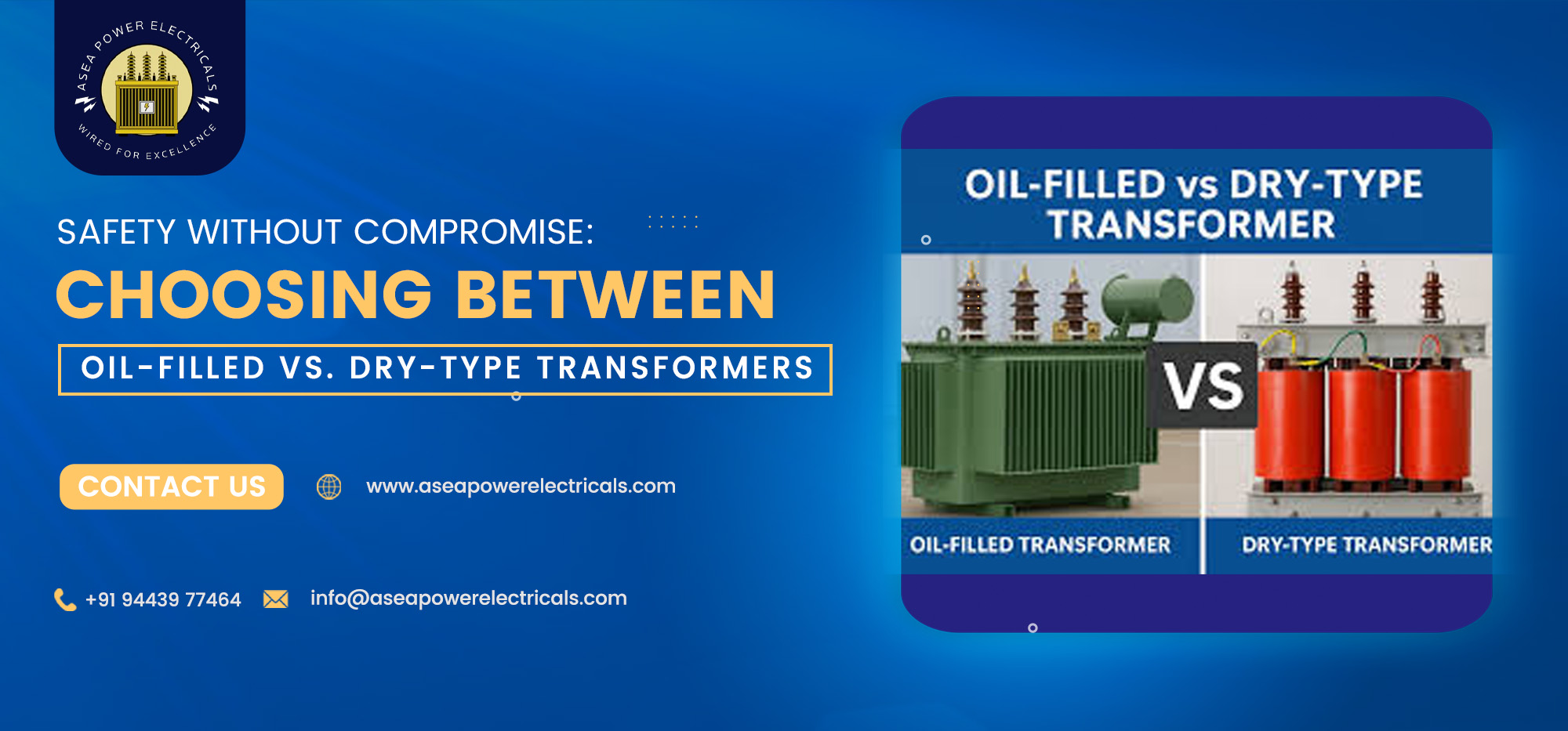
The primary distinction between these two units lies in the insulation and cooling medium used for the transformer coils.
- Oil Filled Transformers: Use flammable mineral oil or high-fire-point synthetic liquids for both insulation and cooling.
- Dry Type Transformers: Utilize air as the cooling medium and solid insulation (like cast resin or vacuum pressure impregnation) to protect the windings.
Safety Comparison for Indoor Environments
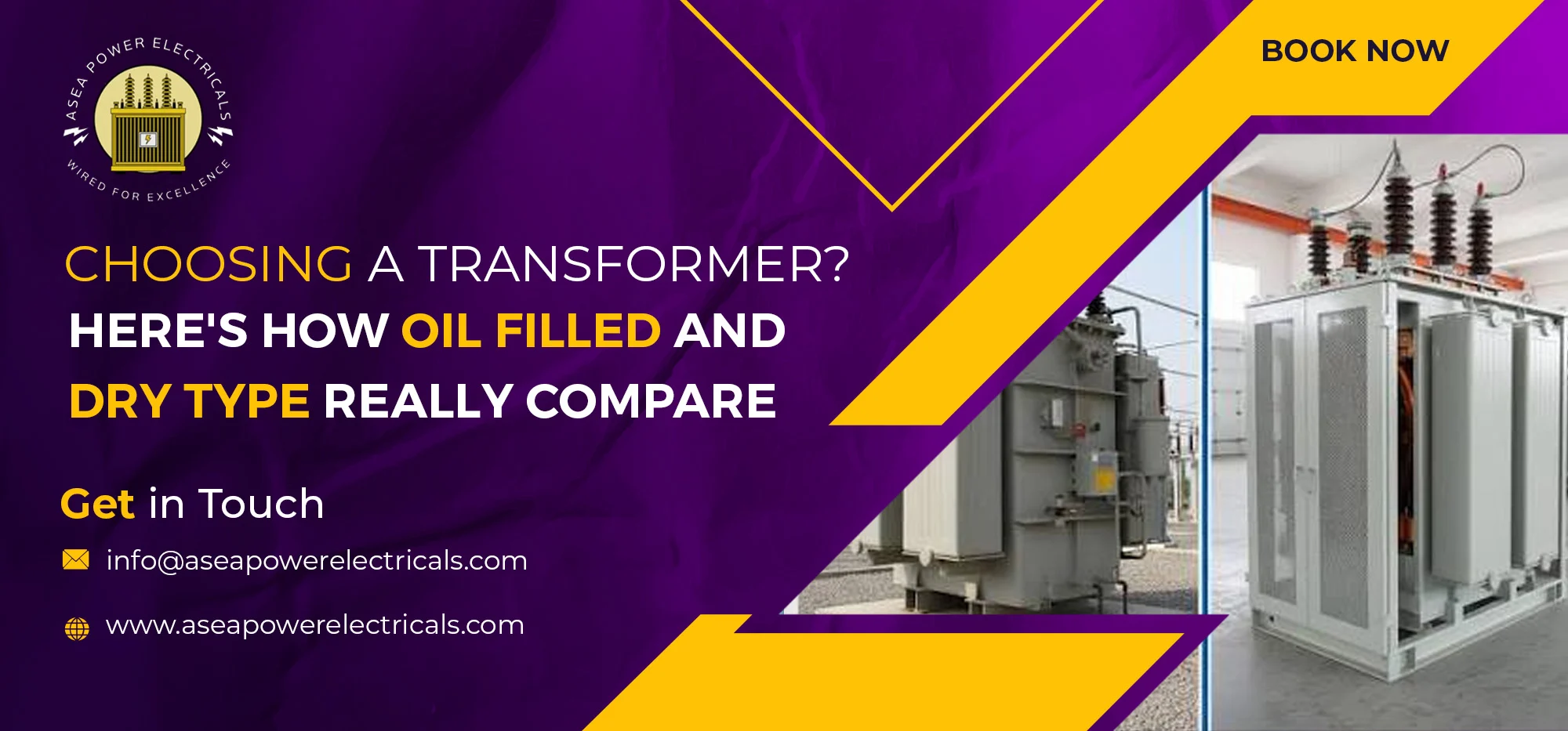
When evaluating the oil filled vs dry type transformer for indoor use, safety is usually categorized into fire risk, environmental impact, and maintenance.
1. Fire Safety (The Deciding Factor)
Indoor installations have limited ventilation and restricted exit paths. Dry type transformers are inherently safer in this regard. We are made of self-extinguishing materials that do not support combustion. In contrast, oil-filled units carry the risk of oil leaks, which can lead to fires or even explosions if a major internal fault occurs.
2. Space and Installation Constraints
Because dry type units have a lower fire risk, we do not require expensive fire-suppression systems, blast-resistant vaults, or oil-containment pits. This makes them significantly easier to install in basements or upper floors of commercial buildings.
3. Environmental and Health Concerns
An oil leak indoors is a hazardous material event. It can contaminate the building’s structure and requires specialized cleanup. Dry type transformers eliminate this risk entirely, making them the "green" choice for modern urban infrastructure.
Why Choose Asea Power Electricals for the Oil Filled vs Dry Type Transformer?
Selecting the right transformer involves more than just picking a category. It requires a partner who understands the nuances of load profiles and safety regulations. Here is why Asea Power Electricals is the trusted choice for industrial and commercial power solutions:
1. Custom-Engineered Solutions
At Asea Power Electricals, we don't believe in one-size-fits-all. We analyze your specific indoor footprint and load requirements to recommend the most efficient oil filled vs dry type transformer configuration.
2. High-Grade Cast Resin Technology
Our dry type transformers utilize advanced cast resin technology, ensuring high short-circuit strength and a maintenance-free life cycle. We are moisture-proof and capable of operating in polluted or humid environments without derating.
3. Strict Quality Compliance
Every unit leaving our facility undergoes rigorous testing. Whether you choose a liquid-immersed unit with biodegradable oil or a high-efficiency dry type unit, you are guaranteed equipment that meets international safety standards.
4. Expert Installation and After-Sales Support
The safety of a transformer is only as good as its installation. Our team at Asea Power Electricals provides end-to-end support, ensuring that clearance distances, ventilation, and protection relays are perfectly calibrated for indoor safety.
When Should You Still Consider Oil Filled Units?
While dry type units win on safety for indoors, oil-filled transformers are often more cost-effective for outdoor substations or extremely high-voltage applications. However, if your project is inside a residential or commercial complex, the reduced insurance premiums and lower civil construction costs of a dry type transformer usually outweigh the initial price difference.
Frequently Asked Questions (FAQ)
1. Which is better for indoor use, an oil filled vs dry type transformer?
For indoor installations, the dry type transformer is generally considered superior due to its high fire safety rating and lack of flammable liquids. It eliminates the need for fire-proof vaults and oil collection pits, saving space and cost.
2. Do dry type transformers require a lot of maintenance?
No. One of the biggest advantages of choosing a dry type unit from Asea Power Electricals is that it is virtually maintenance-free. There is no oil to test, filter, or replace, and the solid insulation is highly resistant to dust and moisture.
3. Is there a noise difference between oil filled vs dry type transformers?
Typically, oil-filled transformers are quieter because the oil acts as a sound dampener. However, at Asea Power Electricals, we use high-quality core materials and precision assembly to ensure our dry type transformers operate at significantly reduced decibel levels suitable for office and hospital environments.
4. Can an oil filled transformer be used indoors safely?
Yes, but it requires significant safety measures, including specialized fire-rated enclosures and drainage systems to manage potential leaks. In most modern building codes, dry type units are preferred to avoid these complex requirements.
5. Why is Asea Power Electricals the best supplier for these transformers?
Asea Power Electricals combines decades of engineering expertise with a commitment to using premium materials. We provide transparent comparisons of oil filled vs dry type transformerdoptions, ensuring our clients receive a solution that balances safety, performance, and budget.