

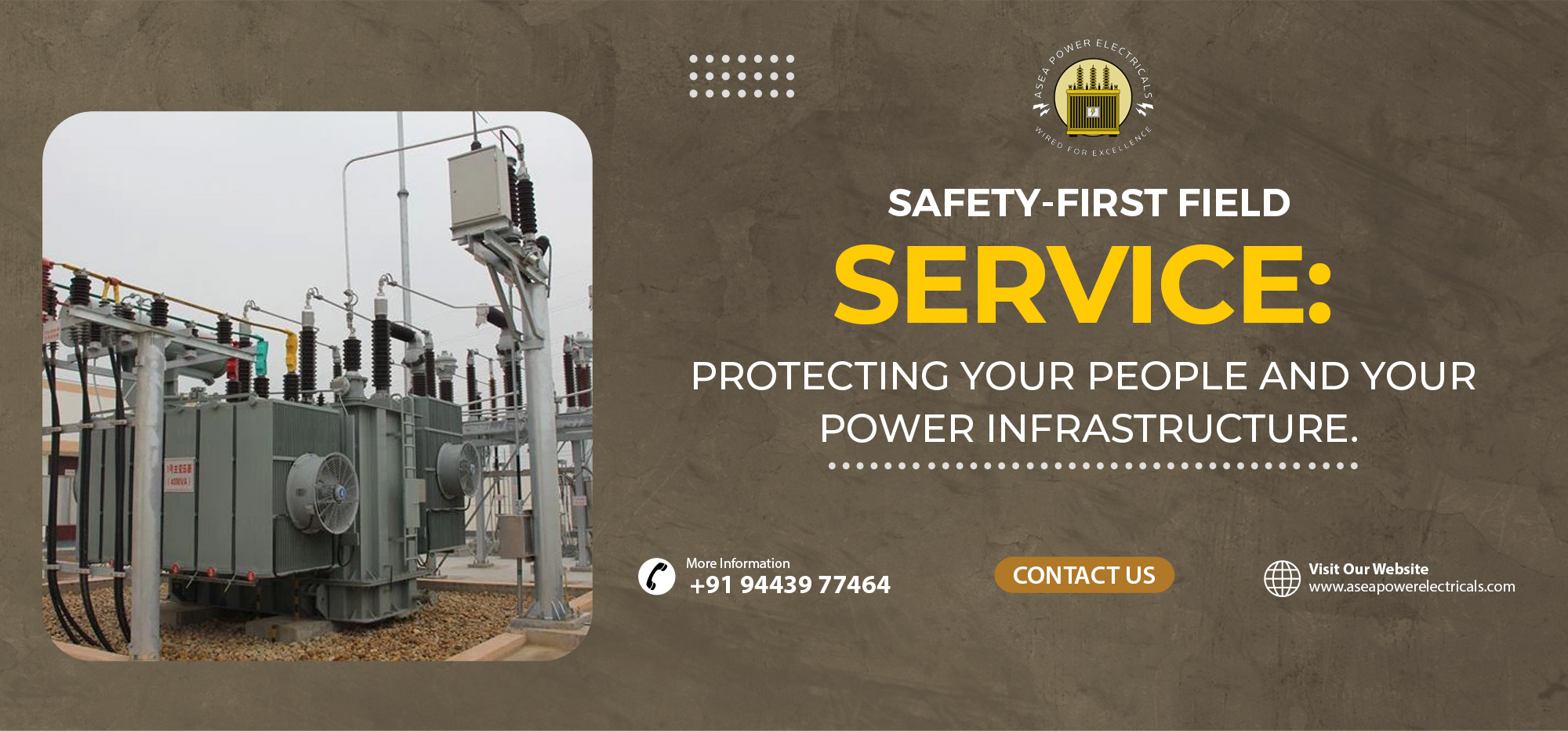
In the high-stakes world of electrical infrastructure, "Zero-Harm" is not just a catchphrase; it is a life-saving operational philosophy. When dealing with an on site transformer, the margin for error is non-existent. At Asea Power Electricals, we recognize that high-voltage repairs are among the most hazardous tasks in the industrial sector.
As we navigate 2026, the complexity of the grid—integrated with renewables and smart technology—demands a safety protocol that exceeds traditional boundaries. Maintaining international safety standards during on-site interventions is how we protect our most valuable assets: our people and your equipment.
The Pillars of Zero-Harm On-Site Transformer Repair
Achieving a zero-harm environment during on site transformer servicing requires a rigorous, multi-layered approach to safety and technical precision.
1. De-Energization and LOTO (Lockout/Tagout)
Before any tool touches a bolt, the transformer must be completely isolated from the power source. Following OSHA 29 CFR 1910.147 and NFPA 70E standards, our technicians implement strict Lockout/Tagout procedures. This ensures that the equipment cannot be accidentally re-energized while work is in progress. We perform a "Live-Dead-Live" test to verify zero voltage across all terminals.
2. Arc Flash Hazard Analysis
High-voltage environments carry the risk of arc flashes—explosive releases of energy that can reach temperatures hotter than the sun. At Asea Power Electricals, we conduct a site-specific arc flash analysis based on IEEE 1584 calculations. This determines the "flash protection boundary" and dictates the level of Personal Protective Equipment (PPE) required for our team.
3. Specialized PPE and Insulated Tooling
Our on-site teams are equipped with the latest 2026-grade arc-rated suits, face shields, and Class 4 insulated gloves. Every on site transformer repair is performed using certified insulated tools that are tested annually for dielectric strength, ensuring that even if an unforeseen surge occurs, the technician remains shielded.
4. Environmental Containment and Oil Safety
Transformer oil is both a high-voltage insulator and a potential environmental hazard. During on-site filtration or gasket replacement, we utilize secondary containment systems to prevent soil contamination. We follow IEC 60296 standards for insulating fluids, ensuring that the oil handled on-site is processed with the highest purity to prevent internal arcing or fires.
5. Confined Space and High-Altitude Safety
Large power transformers often require technicians to work inside the tank or at significant heights on top of the unit. We strictly follow confined space entry protocols, including continuous oxygen monitoring and "hole watch" attendants. For high-altitude work on bushings or conservators, we utilize certified fall-protection harnesses and specialized scaffolding.
Why Choose Asea Power Electricals for the On Site Transformer?
When your high-voltage assets require field service, you need a partner who prioritizes safety as much as speed. Asea Power Electricals has earned its reputation as Chennai's most trusted transformer specialist for several reasons:
- Certified Technical Expertise: Our team consists of certified high-voltage technicians who undergo regular training on the latest IS 2026 and IEC 60076 standards.
- 20+ Years of Field Experience: With over two decades in the industry, we have handled everything from minor oil leaks to complex on-site winding repairs for 220kV class units.
- Mobile Diagnostic Excellence: We bring the lab to you. Our mobile units are equipped for SFRA (Sweep Frequency Response Analysis), Tan Delta testing, and on-site DGA (Dissolved Gas Analysis) to catch faults before they become disasters.
- Zero-Harm Track Record: We take pride in our impeccable safety record. By choosing us for your on site transformer needs, you are ensuring that your facility remains compliant with international safety audits.
FAQ: On Site Transformer Safety
1. What are the mandatory safety standards for an on site transformer repair?
In India, the primary standards are IS 2026 (for performance) and the Central Electricity Authority (CEA) guidelines. Internationally, we align with IEC 60076 and NFPA 70E for electrical safety and OSHA for workforce protection. Compliance with these ensures a safe and legally sound repair process.
2. How do you prevent fires during on site transformer servicing?
Fire prevention is managed through strict "Hot Work" permits, the use of non-flammable cleaning agents, and ensuring that all oil processing is done under a vacuum to remove volatile gases. We also maintain a 10-foot safety clearance from combustible materials during the repair.
3. Can an on site transformer be repaired while energized?
Only very specific, non-invasive maintenance (like visual inspections or thermal imaging) is done while energized. For any physical repair, the unit must be de-energized. "Online" oil filtration is possible in some cases, but only with specialized equipment and strict bypass protocols.
4. What is a "Safe Approach Boundary" in high-voltage work?
The Safe Approach Boundary is the minimum distance an unqualified person must maintain from energized parts. During an on site transformer repair, we clearly demarcate these boundaries with physical barriers and warning signs to keep your plant personnel safe.
5. Why is grounding (Earthing) critical during on-site repairs?
Even a de-energized transformer can hold a significant capacitive charge or be affected by "static induction" from nearby live lines. Temporary protective grounding is essential to drain any residual energy and ensure the technician is working on a truly "dead" system.