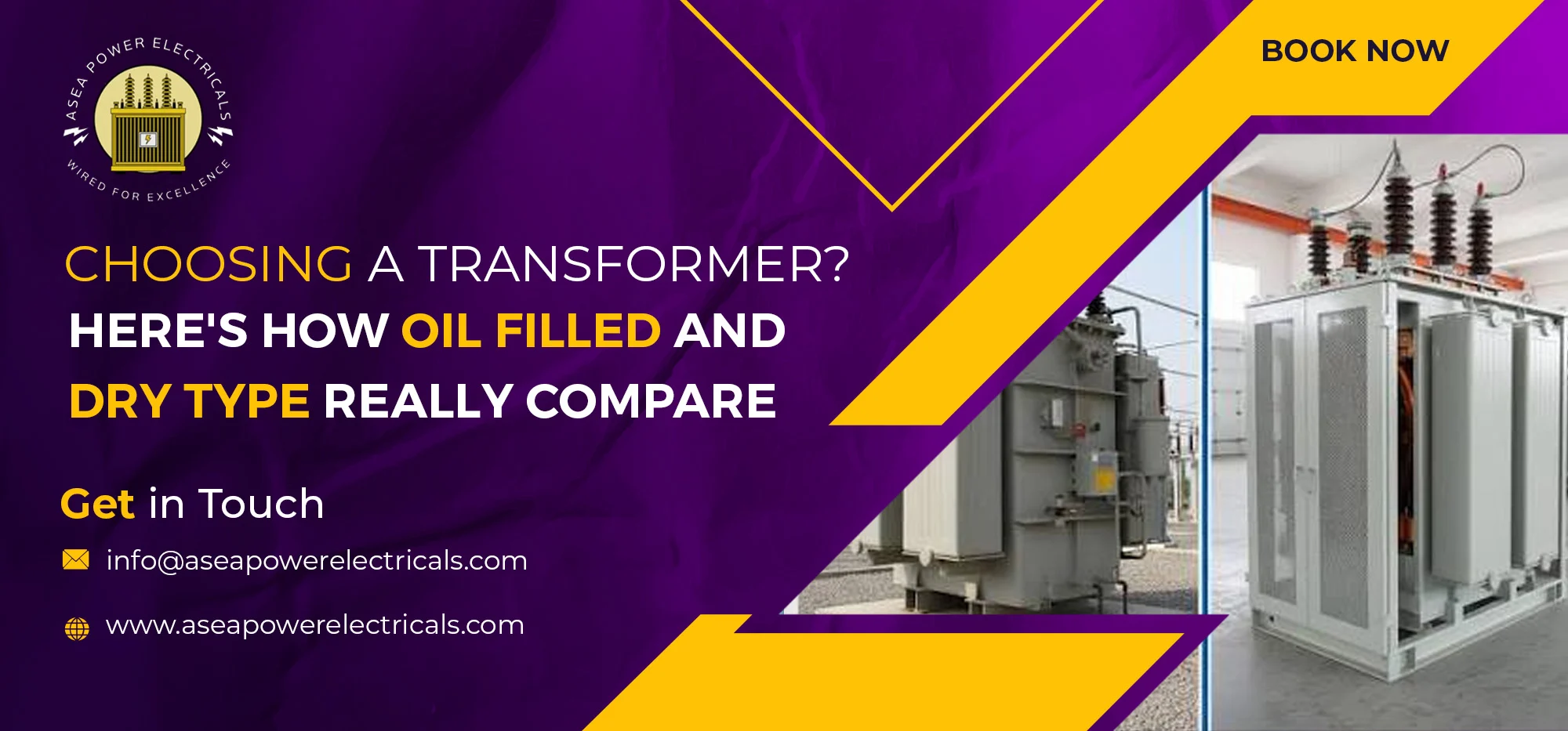


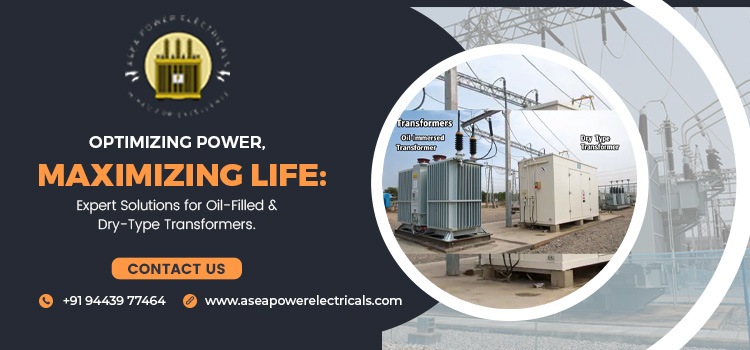
When choosing between an oil filled vs dry type transformer, most decision-makers look first at the price tag or the installation site. While these are important, 2026 industrial trends show that one technical metric stands above the rest in determining your long-term return on investment: The Load Factor.
At Asea Power Electricals, we’ve seen countless facilities over-spend on energy or face premature equipment failure simply because the transformer type didn't match the actual electrical demand. In this guide, we’ll explain how the load factor dictates whether you should go "liquid" or "dry."
1. Understanding the Core Difference: Oil vs. Dry
Before we dive into the math, let’s define our contenders.
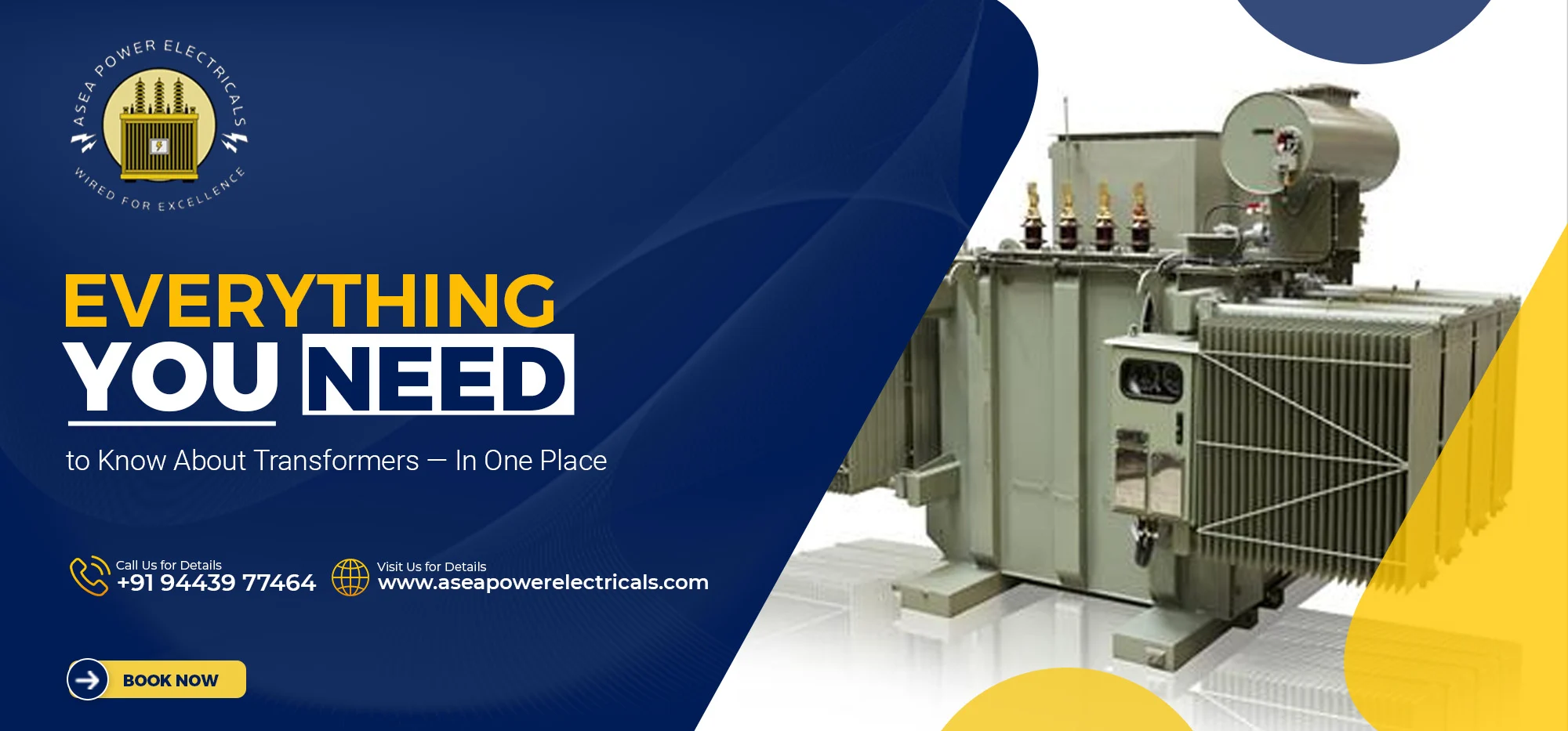
- Oil-Filled Transformers: These submerge the core and windings in a dielectric fluid (mineral oil or synthetic esters) that acts as both an insulator and a superior cooling medium.
- Dry-Type Transformers: These use air for cooling and solid insulation like cast resin. We are the "safety champions" for indoor use but have different thermal characteristics.
2. Why Load Factor is the "Silent Decision Maker"
Load factor is the ratio of your average load to your peak load over a specific period. This determines how much heat your transformer generates and how efficiently it can shed that heat.
The Case for Oil-Filled (Heavy Load Scenarios)
If your facility operates with a load factor above 50-60% (common in 24/7 manufacturing plants, steel mills, and data centers), oil-filled transformers are almost always the winner.
- Superior Heat Dissipation: Oil has a thermal conductivity roughly 6 times higher than air. Under heavy, continuous loads, oil circulates through radiators to shed heat rapidly, preventing the "hot spots" that degrade insulation.
- Efficiency at Scale: Oil-filled units typically have lower "load losses." If you are pushing your transformer hard, the energy savings from higher efficiency can pay for the unit's maintenance within just a few years.
The Case for Dry-Type (Light or Intermittent Loads)
If your load factor is below 30-40% (common in office buildings, schools, or seasonal warehouses), a dry-type transformer becomes highly attractive.
- Lower Maintenance Overhead: Dry-type units don't require oil testing, filtration, or leak checks. At lower loads, the efficiency gap between air and oil narrows, meaning the maintenance savings often outweigh the minor energy losses.
- Space & Safety: Since we are fire-resistant, we can be placed closer to the load center (inside the building), reducing the cost of expensive low-voltage cable runs.
3. Why Choose Asea Power Electricals for the Oil Filled vs Dry Type Transformer?
Deciding on a transformer is a high-stakes engineering move. Here is why industries across the region partner with Asea Power Electricals:
A. 20+ Years of Field Expertise
We don't just sell equipment; we understand it. With over two decades of experience handling ratings up to 100MVA, we’ve serviced every imaginable configuration. We know exactly how a 110KV oil-filled unit behaves compared to a medium-voltage cast resin unit in high-humidity environments.
B. Advanced Diagnostic & Load Profiling
We don't guess your load factor—we measure it. Asea Power Electricals uses sophisticated data logging and fault analysis to map your power consumption. This ensures the transformer we recommend is "right-sized" for your specific operations, avoiding the common mistake of buying an oversized unit that wastes "no-load" energy.
C. 24/7 Emergency & Maintenance Support
Transformers don't follow a 9-to-5 schedule. Whether it's an urgent oil filtration for a leaking unit or a deep clean for a dusty dry-type unit in a commercial basement, our rapid-response teams are available around the clock to ensure zero downtime.
D. Modernization & Retrofitting
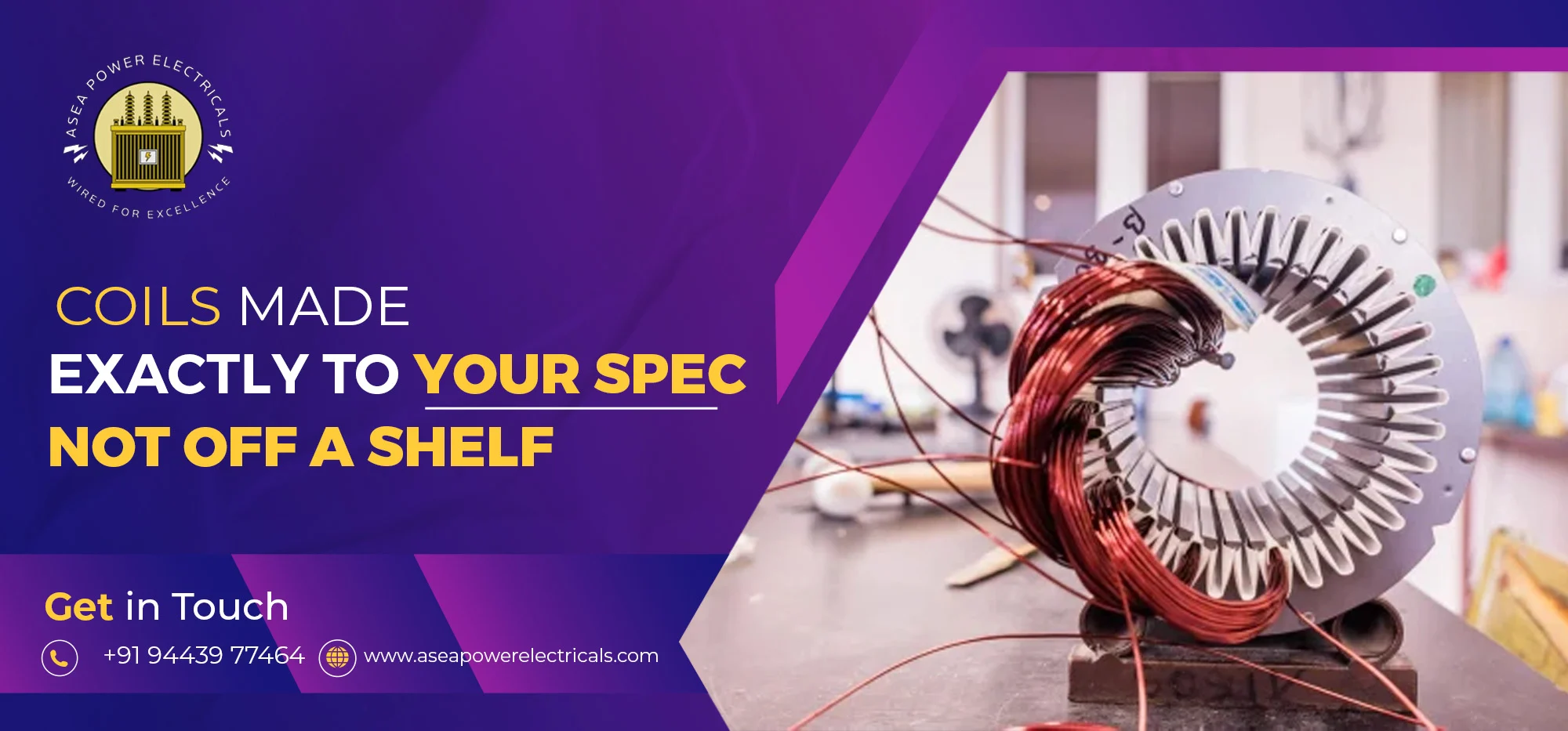
Not ready for a full replacement? We specialize in refurbishment. We can upgrade the insulation, replace burnt coils, or modernize the cooling systems of your existing units to meet 2026 energy efficiency standards at a fraction of the cost of a new purchase.
Choose Based on Your Pulse
The "pulse" of your facility is its load profile. If your load is heavy and constant, let the oil flow. If your load is light and safety is paramount, stay dry.
Unsure which way to go?
Contact Asea Power Electricals today for a comprehensive load factor assessment and a custom quote. Let our engineers ensure your power stays reliable for the next 30 years
FAQ: Oil Filled vs Dry Type Transformer
1. Which is more efficient: an oil filled vs dry type transformer?
Generally, oil-filled transformers are more efficient, especially at higher loads (above 50%). They have lower energy losses because oil is a more effective cooling medium than air, allowing the transformer to run cooler. However, at very low load factors (under 25%), the maintenance savings of a dry-type unit may make it the more "economical" choice.
2. Can an oil filled vs dry type transformer be used indoors?
Dry-type transformers are the standard for indoor use due to their fire-resistant properties. While you can use an oil-filled transformer indoors, it requires expensive fireproof vaults, oil containment systems, and specialized fire suppression, making it much more costly for indoor projects.
3. How does maintenance differ for oil filled vs dry type transformers?
Oil-filled units require regular Dissolved Gas Analysis (DGA) and oil filtration to prevent carbonization. Dry-type transformers are "low maintenance" but still require periodic visual inspections, dust removal from cooling vents, and tightening of electrical connections to prevent overheating.
4. What is the typical lifespan of an oil filled vs dry type transformer?
With proper maintenance, an oil-filled transformer can last 25 to 40 years. A dry-type transformer typically has a shorter lifespan of 15 to 25 years, as its solid insulation is more susceptible to thermal aging and environmental contaminants like dust and moisture.
5. Is an oil filled vs dry type transformer better for environmental sustainability?
Dry-type transformers are often considered "greener" because they eliminate the risk of oil spills and toxic waste. However, Asea Power Electricals now offers oil-filled units that use biodegradable ester fluids, providing the cooling benefits of liquid with a significantly lower environmental footprint.