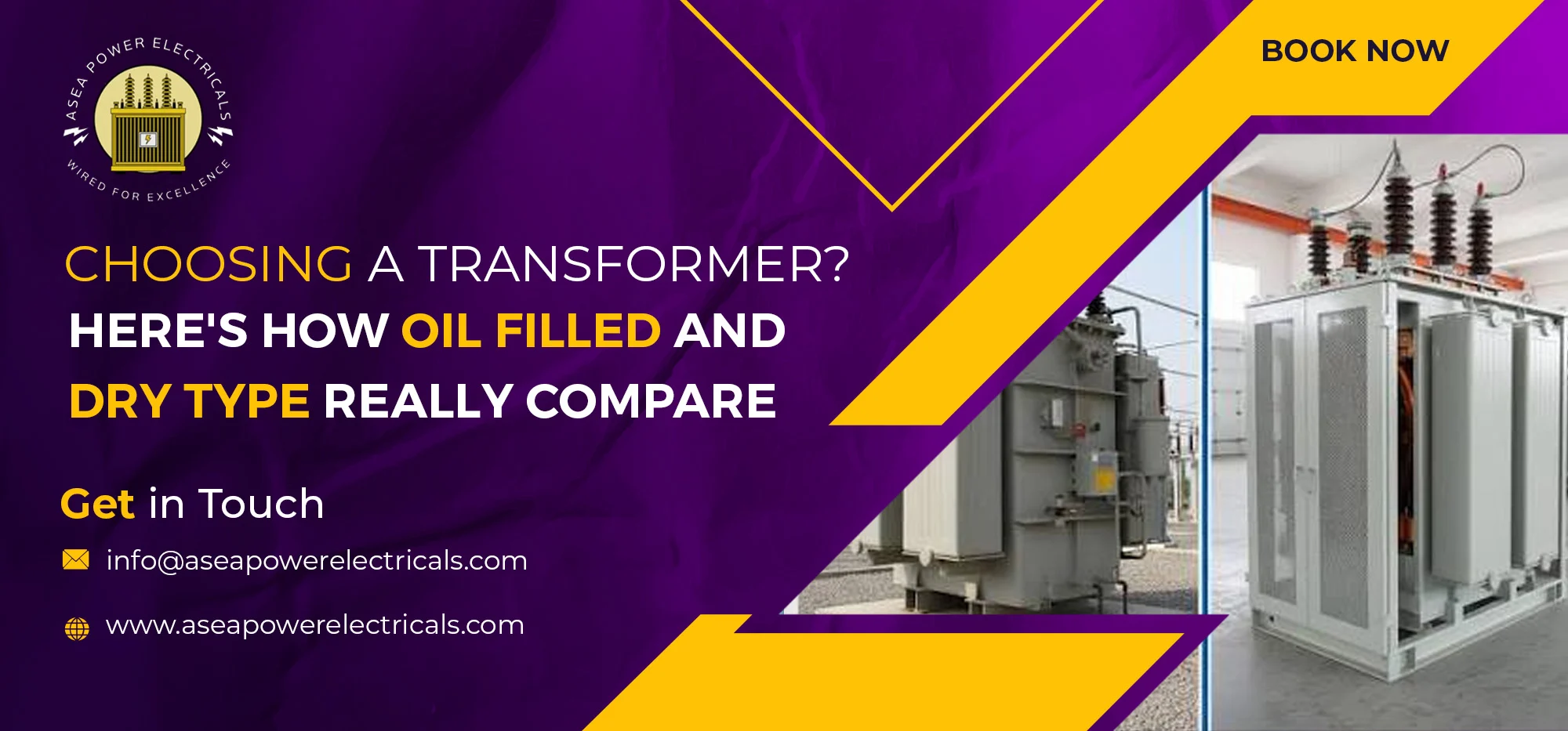


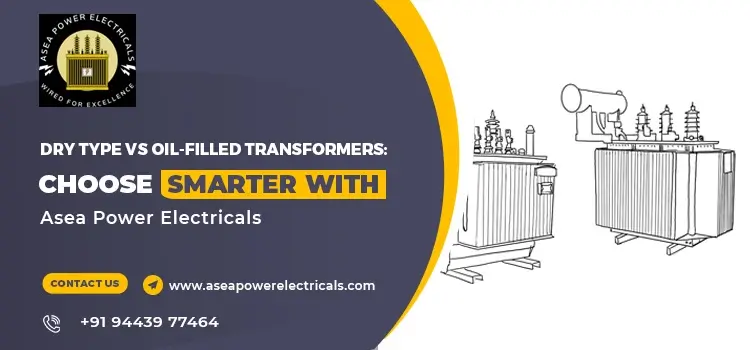
Transformers remain the backbone of any power distribution system, ensuring electrical energy is transmitted safely, efficiently, and reliably. Among the various transformer technologies available today, the debate of dry type transformer vs oil filled is one that industries, commercial facilities, and utilities frequently encounter. Each type has unique strengths and limitations, making proper selection crucial for long-term performance, safety, and operational efficiency.
In this detailed guide, we explore the difference between dry type and oil-filled transformers, our ideal applications, performance characteristics, and why Asea Power Electricals stands out as the preferred partner when choosing between dry type transformer vs oil filled solutions.
Understanding the Basics: Dry Type vs Oil-Filled Transformers
When comparing dry type transformer vs oil filled, the key difference lies in how the insulation and cooling mechanisms work.
1. Dry Type Transformers
Dry type transformers use air or gas for cooling and rely on high-temperature insulation systems. They do not use liquid dielectric fluids, making them ideal for environments where safety, minimal fire risk, and low maintenance are crucial.
Key Features:
- No oil, thereby reducing fire hazards
- Environmentally safer with no risk of leakage
- Ideal for indoor installations
- Lower maintenance
Common Applications:
- Commercial buildings
- Hospitals
- Schools
- High-rise towers
- Data centers
- Underground substations
2. Oil-Filled Transformers
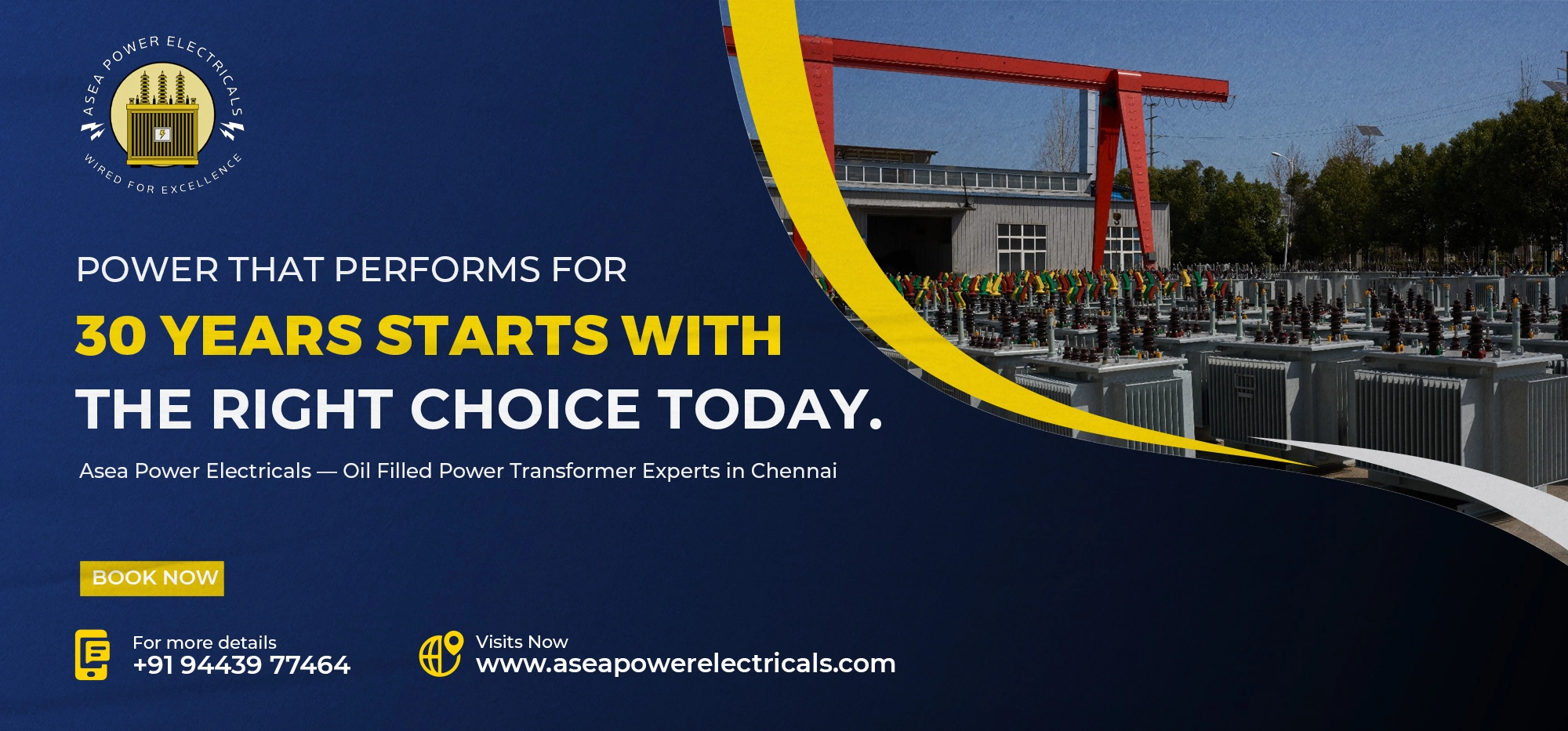
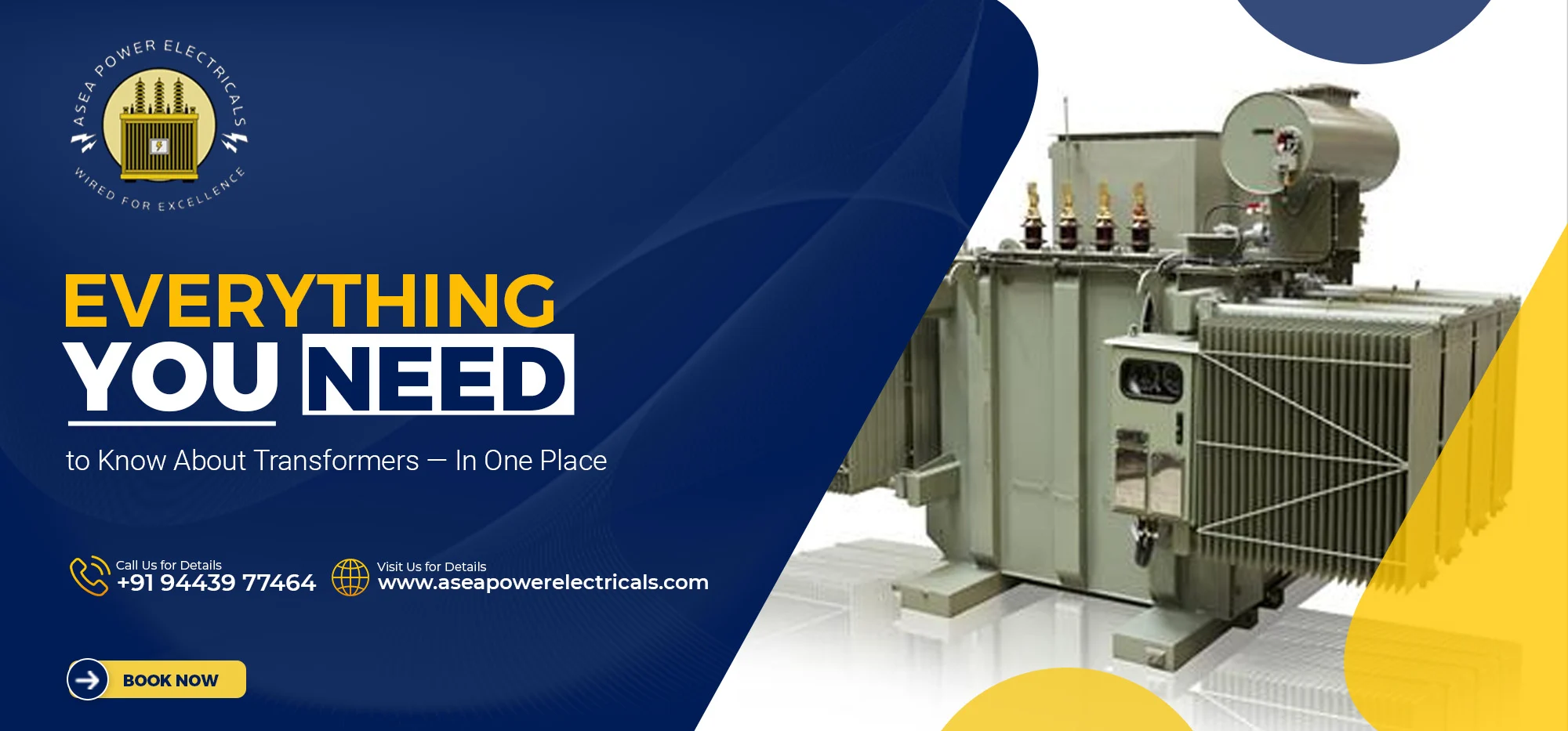
Oil-filled transformers use mineral oil or synthetic oil as both coolant and insulation. Our cooling efficiency and high load-handling capacity make them the most widely used transformers globally.
Key Features:
- Excellent cooling performance
- Higher efficiency at heavy loads
- Longer life expectancy
- Suitable for outdoor and industrial applications
Common Applications:
- Power plants
- Large industries
- Outdoor substations
- Distribution networks
- Renewable energy installations
Dry Type Transformer vs Oil Filled: A Technical Comparison
To make an informed choice, understanding the operational differences between dry type transformer vs oil filled is essential.
1. Cooling and Efficiency
- Oil-filled transformers offer superior cooling capability, allowing them to operate efficiently even under high load fluctuations.
- Dry type transformers have limited cooling efficiency due to reliance on air circulation.
2. Safety and Fire Resistance
- Dry type transformers are more fire-resistant since they contain no oil.
- Oil-filled transformers require strict monitoring because oil can be flammable.
3. Location Suitability
- Dry type → Best for indoor use, restricted areas, and public spaces
- Oil-filled → Preferable for outdoor or industrial applications
4. Environmental Considerations
- Dry type transformers are eco-friendly with zero risk of oil spills.
- Oil-filled transformers require containment systems to prevent soil or groundwater contamination.
5. Cost and Maintenance
- Dry type transformers cost more initially but have lower maintenance costs.
- Oil-filled transformers are less expensive upfront but require routine oil testing, filtration, and maintenance.
From this comparison, the choice between dry type transformer vs oil filled depends entirely on operational environment, load requirements, safety needs, and long-term maintenance considerations.
Why Choose Asea Power Electricals for Dry Type Transformer vs Oil Filled Solutions?
When industries look for guidance on dry type transformer vs oil filled selection, Asea Power Electricals stands out as a trusted name in the electrical engineering sector. Here’s what sets us apart:
1. Expert Technical Consultation
Asea Power Electricals offers precise technical evaluation based on:
- Load profiles
- Environmental conditions
- Safety requirements
- Budget and lifecycle expectations
We help you choose the right transformer type without guesswork.
2. High-Quality, Standards-Compliant Products
Our transformers meet stringent national and international standards including:
- IS/IEC certifications
- Safety and performance-compliant insulation systems
- Robust cooling technologies
Whether you choose dry type or oil-filled, you receive guaranteed quality.
3. Custom-Built Transformer Solutions
We design and manufacture transformers tailored to your application needs:
- Indoor–safe dry type
- High-load oil-filled
- Energy-efficient systems
- Noise-controlled transformers
4. Advanced Testing and Quality Assurance
Asea Power Electricals uses state-of-the-art testing labs to ensure:
- Thermal stability
- Load endurance
- Dielectric strength
- Mechanical robustness
Your assets are built to last.
5. End-to-End Support and Maintenance
From installation to lifetime servicing, we provide:
- On-site commissioning
- Routine inspections
- Preventive maintenance
- Emergency support
This ensures your transformer performs optimally throughout its lifecycle.
When evaluating dry type transformer vs oil filled, partnering with Asea Power Electricals ensures safe decisions and reliable performance.
Choosing between a dry type transformer vs oil filled solution depends on understanding your operational environment, load demands, safety priorities, and maintenance capacity. Dry type transformers offer unmatched safety for indoor and public spaces, while oil-filled transformers provide superior efficiency and load-handling capacity for heavy industrial and outdoor applications.
With Asea Power Electricals, you gain an experienced team committed to providing reliable transformer solutions engineered with precision, durability, and industry-best safety standards. No matter the application, we help you select the right transformer that guarantees long-term performance and peace of mind.
Frequently Asked Questions Above Dry Type Transformers vs Oil-Filled
1. Which is safer: dry type transformer or oil filled?
Dry-type transformers are generally safer because they do not contain flammable oil. They are recommended for indoor and public spaces.
2. Do oil-filled transformers require more maintenance?
Yes. Oil-filled transformers need periodic oil testing, filtration, and leak inspections, while dry-type transformers require minimal maintenance.
3. Which transformer lasts longer?
Oil-filled transformers usually have a longer lifespan due to superior cooling, but both types can last decades with proper care.
4. Can dry-type transformers be used outdoors?
They can, but protective enclosures are required. Oil-filled transformers are typically preferred for outdoor environments.
5. How do I decide between dry-type transformer vs oil filled?
Your choice depends on safety needs, installation environment, load demands, and long-term maintenance plans. Asea Power Electricals offers expert evaluation to help you choose.