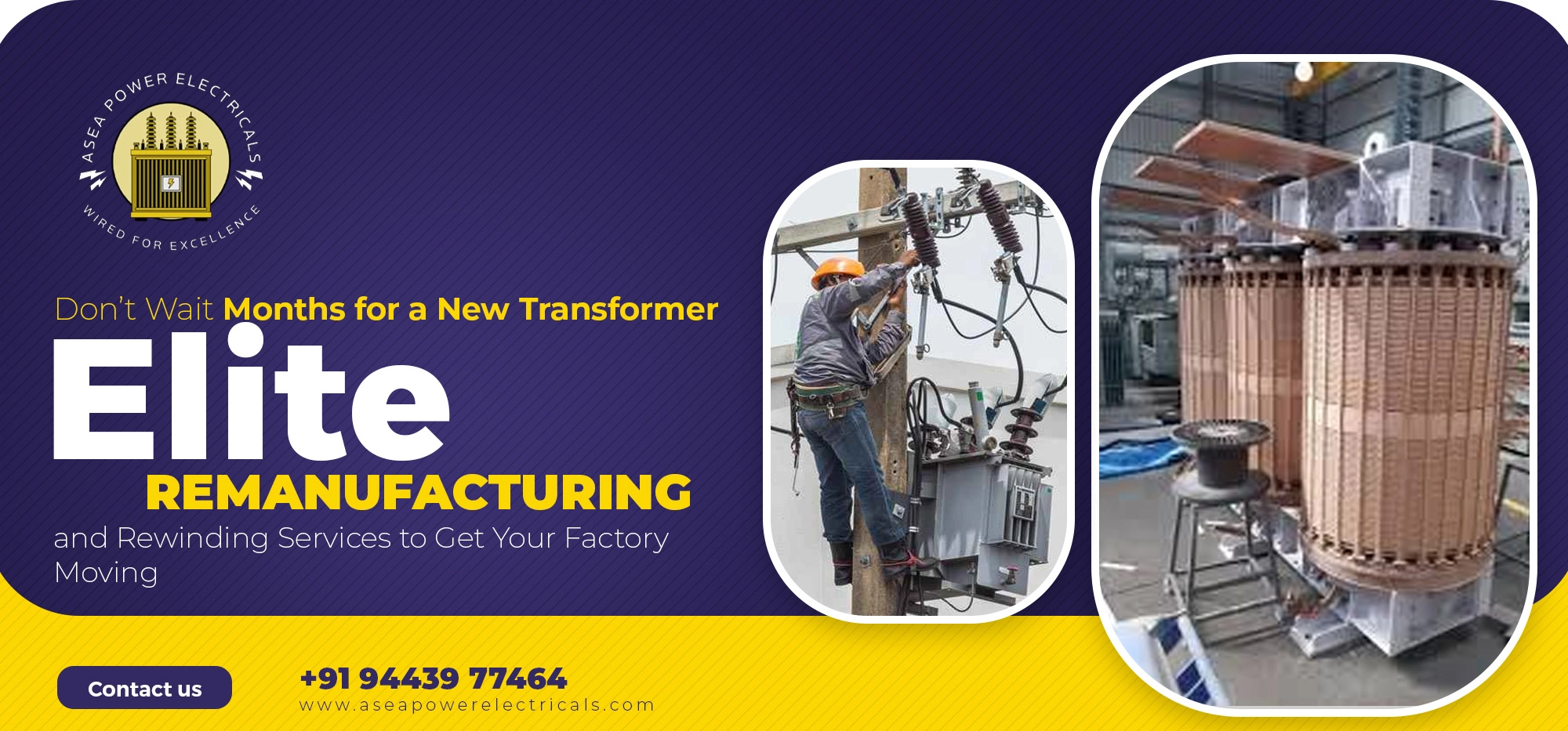


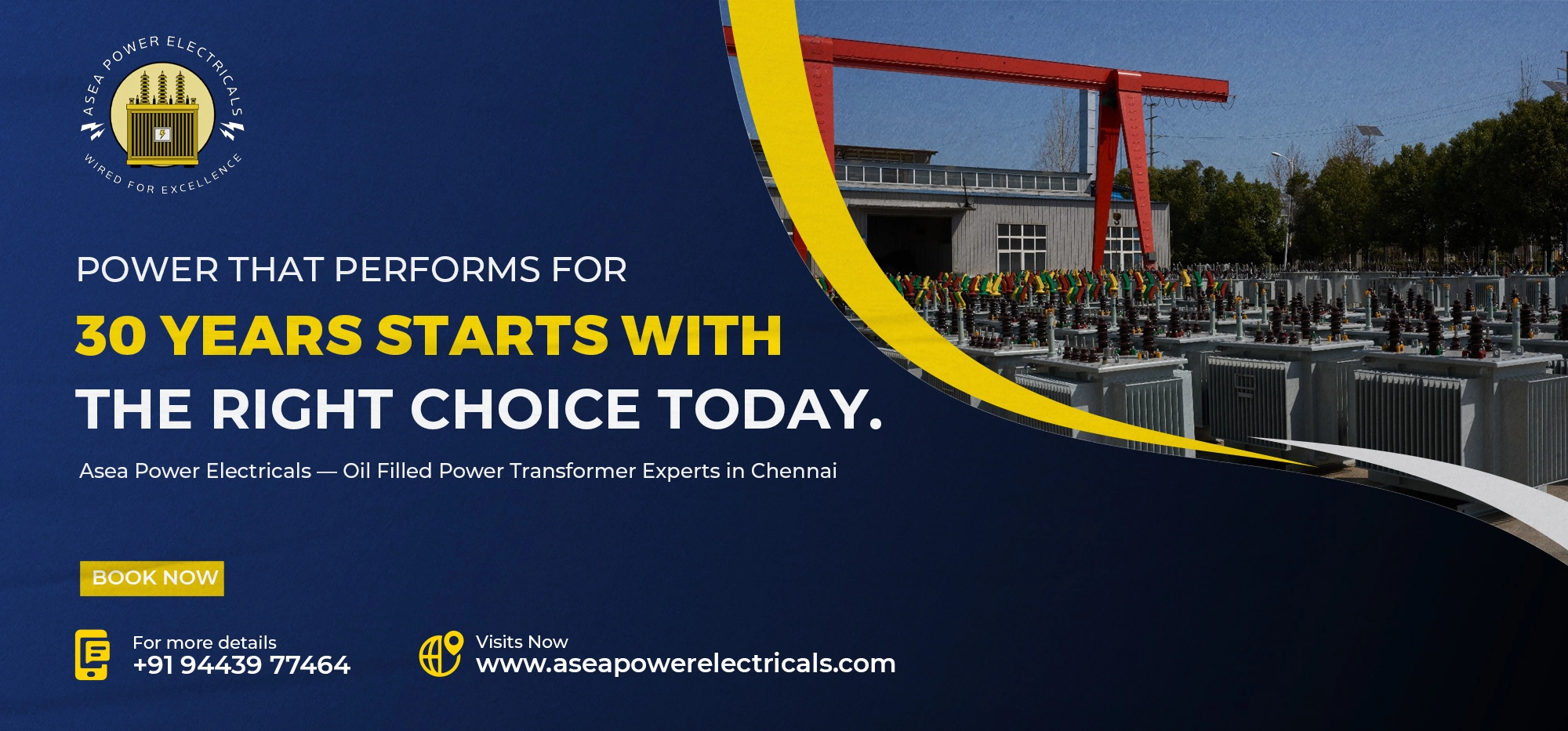
In most industrial plants, the power transformer sits somewhere near the boundary wall or in a dedicated substation room — largely out of sight, almost entirely out of mind — until something goes wrong. And when something goes wrong with a transformer, everything stops. The production line, the HVAC, the lighting, the data systems, sometimes even the fire protection system. The entire facility depends on that one piece of equipment doing its job, continuously, for decades.
That is precisely why the decision about which oil filled power transformer to install — and who services it — is one of the most consequential infrastructure choices a plant, factory, or commercial complex makes. Get it right, and you have a reliable, efficient power supply that runs for 30 years with predictable maintenance costs. Get it wrong, and you spend years dealing with efficiency losses, premature failures, oversized repair bills, and the kind of unplanned downtime that quietly erodes profit margins.
This blog is a practical guide for anyone involved in specifying, procuring, or managing oil filled power transformers — whether you are a plant engineer evaluating options for a new installation, a facility manager responsible for an ageing transformer fleet, or a project manager overseeing a new industrial development in Chennai. We will cover what oil filled transformers are, why they remain the dominant choice across industrial applications, the key specifications that determine long-term performance, the warning signs that an existing unit needs attention, and why Asea Power Electricals is the partner that Chennai's industries trust for transformer supply, installation, and lifetime service.
⚡ Speak to a Transformer Specialist Today — Call Asea Power Electricals: +91 94439 77464
What Is an Oil Filled Power Transformer and How Does It Work?
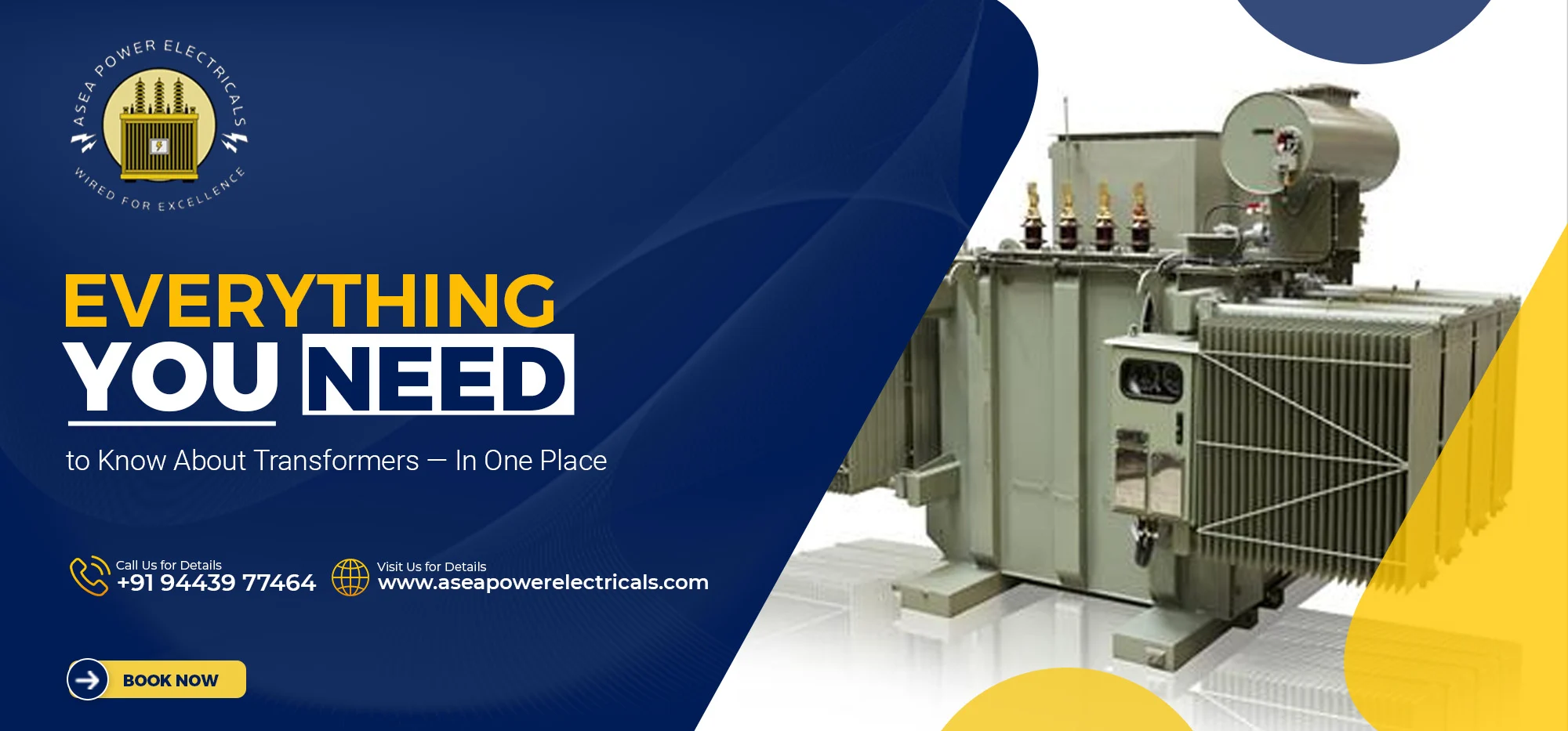
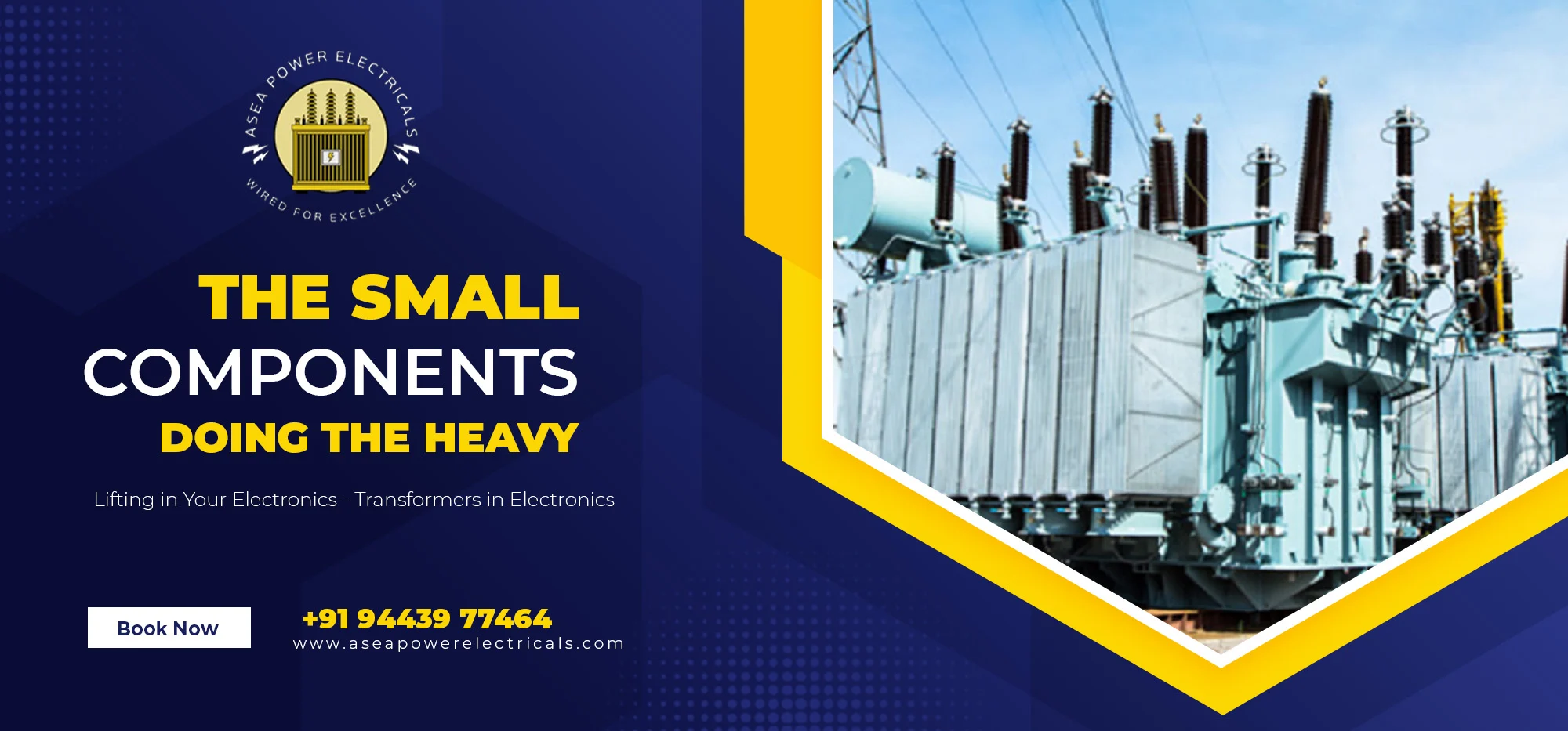
An oil filled power transformer — also called a liquid-immersed transformer — is a transformer in which the core and windings are immersed in insulating oil contained within a sealed steel tank. The oil serves two essential functions simultaneously: it insulates the internal electrical components from each other and from the tank, and it transfers heat generated by the windings and core away from those components and toward the tank walls and cooling radiators, where it dissipates into the surrounding air.
This oil-based design has been the dominant technology for medium and high-voltage power transformers for well over a century — and it remains the first choice for industrial, utility, and large commercial applications worldwide. The reasons are straightforward: oil-filled transformers handle higher voltages and larger kVA ratings more efficiently than dry-type alternatives, they have longer operational lifespans when properly maintained, they offer superior overload tolerance, and they are fundamentally more repairable — a significant advantage in an asset with a 25 to 40-year service life expectation.
Types of Oil Filled Power Transformers and Their Applications
Distribution Transformers
Distribution transformers step down high-voltage supply from the grid or substation to the utilisation voltage required by industrial or commercial facilities — typically 11kV to 433V or 6.6kV to 433V in Indian applications. These are the most common oil filled transformers in industrial settings, found at the entry point of almost every manufacturing plant, warehouse, data centre, and commercial complex connected to TNEB supply.
Power Transformers for Industrial Applications
Larger oil filled power transformers handle higher voltage ratios and larger kVA capacities for industrial applications where utility-level voltages are brought directly into the facility. Furnace transformers for steel and foundry applications, rectifier transformers for electrochemical processes, and large unit transformers for power generation facilities all fall into this category.
Auto Transformers
Auto transformers use a single winding with multiple taps rather than separate primary and secondary windings. They are more compact and cost-effective for applications where a relatively small voltage ratio change is required, and are widely used in grid interconnection and voltage regulation applications.
Earthing Transformers
Earthing or grounding transformers provide a neutral point for systems that would otherwise be isolated, enabling proper earth fault protection. They are commonly installed in industrial substations alongside main power transformers.
Key Specifications That Define Long-Term Transformer Performance
For anyone involved in specifying or procuring an oil filled power transformer, understanding these core specifications is essential to making a decision that performs well over the asset's full operational life:
kVA Rating and Load Profile
The transformer's kVA rating must be matched to both the current load and a realistic assessment of future load growth. Undersizing creates chronic overloading that degrades insulation and reduces service life. Oversizing creates a transformer that runs inefficiently at low load factors. The right sizing comes from a proper load analysis — something Asea Power Electricals can assist with as part of their installation support service.
Voltage Ratio and Impedance
The voltage ratio must precisely match the supply voltage and the facility's utilisation voltage requirements. Impedance affects both the fault current levels the system protection must handle and the voltage regulation under varying load conditions. These parameters must be specified in consultation with the facility's electrical design team.
Insulating Oil Type and Quality
Mineral oil has been the standard transformer insulating medium for decades, offering excellent dielectric properties and thermal performance. Modern alternatives include biodegradable ester oils, which offer superior fire safety, environmental performance, and high-temperature operation for applications where these factors are priorities. The oil's quality at commissioning — moisture content, dielectric strength, acid value — sets the baseline for the transformer's insulation health from day one.
Cooling System Design
Oil natural air natural (ONAN) cooling is standard for most distribution and medium power transformers. Larger units use forced cooling — oil forced air forced (OFAF) or oil directed air forced (ODAF) — to achieve higher ratings within a given physical envelope. The cooling system must be matched to the operating environment: Chennai's tropical climate, with its high ambient temperatures and humidity, places real demands on transformer thermal performance.
Protection and Monitoring Equipment
A well-specified oil filled transformer should include Buchholz relay for gas and oil surge detection, winding temperature indicators, oil temperature gauges, pressure relief devices, oil level indicators, and provision for dissolved gas analysis sampling. These protection and monitoring systems are what enable early fault detection before catastrophic failure occurs.
Why Proper Maintenance Is What Separates a 30-Year Transformer From a 15-Year One
The design life of a well-built oil filled power transformer is typically 25 to 40 years. Whether your specific unit reaches the upper or lower end of that range depends almost entirely on how it is maintained. The transformer's insulation system — primarily the cellulose paper insulation on the windings, which is impregnated with oil — is the component most sensitive to degradation. Once cellulose insulation is damaged by heat, moisture, or oxidation, it cannot be restored. The only option at that point is rewinding.
Preventing insulation degradation is the core objective of transformer maintenance. That means keeping oil quality high, keeping moisture out, keeping the transformer operating within its thermal rating, and catching early signs of developing faults through regular testing and oil analysis. Asea Power Electricals provides comprehensive preventive maintenance programmes for oil filled transformers — covering oil filtration and testing, insulation testing, protection device calibration, OLTC servicing, and thermal imaging — all delivered on-site at your facility.
Warning Signs Your Oil Filled Transformer Needs Immediate Professional Attention
- Oil discolouration or dark, murky appearance — indicates severe oil degradation, high carbon content, or internal arcing
- Abnormal operating temperature — thermal images or winding temperature indicators showing values above rated limits suggest cooling system issues or internal hot spots
- Oil leaks from tank seams, bushings, or cooling radiators — moisture ingress follows oil loss, accelerating insulation degradation
- Unusual humming, buzzing, or vibration sounds — can indicate core lamination loosening, winding movement, or cooling fan problems
- Buchholz relay gas accumulation — gas appearing in the Buchholz relay is a direct indication of internal fault activity requiring immediate investigation
- Tripping on protection with no clear external fault — repeated unexplained tripping can indicate internal insulation breakdown or protection device malfunction
- Reduced voltage regulation — output voltage instability under varying load often points to OLTC or winding issues
Why Choose Asea Power Electricals for Oil Filled Power Transformer Services?
- 20+ Years of Transformer Expertise — two decades of specialist experience across all types and ratings of oil filled power transformers
- End-to-End Service Capability — from installation and commissioning through to repair, refurbishment, rewinding, and decommissioning, everything under one roof
- Advanced Diagnostic Technology — full suite of transformer testing equipment for accurate, comprehensive health assessment of your transformer asset
- Certified Technicians Following International Standards — all work is carried out to IEC and BIS standards by trained and certified professionals
- On-Site Service Minimises Downtime — the majority of maintenance and repair work carried out at your facility, preserving production continuity
- Eco-Friendly Oil Replacement Options — biodegradable ester oil alternatives available for facilities with sustainability commitments or fire safety requirements
- Smart Monitoring System Integration — IoT-based real-time transformer health monitoring systems can be installed for continuous performance visibility
- Preventive Maintenance Contracts — structured AMC programmes that keep your transformer on a regular service schedule, catching problems before they become failures
- 24/7 Emergency Response — round-the-clock availability for transformer fault response when unplanned outages occur
- Transparent Reporting and Documentation — complete service records, oil test certificates, and test reports provided after every engagement.
Your oil filled transformer deserves expert care. Book a professional assessment with Asea Power Electricals today. Call +91 94439 77464 | aseapowerelectricals.com | 83/1, Market Lane, Kaladipet, Tiruvottiyur, Chennai 600019.
The Right Transformer, Properly Maintained, Is One of the Best Investments Your Facility Will Ever Make
An oil filled power transformer is not a commodity purchase. It is a 30-year infrastructure commitment that underpins your entire facility's power supply. The quality of the unit, the precision of its installation, and the consistency of its maintenance directly determine whether that 30-year promise is kept or cut short by avoidable failures.
Asea Power Electricals has spent over two decades helping industrial and commercial clients across Chennai and Tamil Nadu get that equation right — whether that means installing a new transformer correctly from day one, restoring an ageing unit to reliable performance, or putting an under-maintained asset on a proper preventive care programme before a failure forces a far more expensive decision.
The conversation starts with a call. The difference it makes lasts decades.
⚡ +91 94439 77464 | aseapowerelectricals.com | Tiruvottiyur, Chennai 600019.
Frequently Asked Questions — Oil Filled Power Transformer
Q1. What is the typical service life of an oil filled power transformer with proper maintenance?
A well-designed oil filled power transformer that is properly maintained can reliably serve for 25 to 40 years. The primary determinant of service life is the condition of the winding insulation system — specifically the cellulose paper insulation impregnated with oil. Keeping oil quality high through regular filtration and testing, preventing moisture ingress, and operating the transformer within its thermal rating are the three most important factors in achieving the upper end of that service life range. Asea Power Electricals' preventive maintenance programmes are designed specifically to maximise transformer longevity.
Q2. How often should transformer oil be tested and filtered?
For most industrial oil filled power transformers, a comprehensive oil analysis — covering dielectric strength, moisture content, acid value, and dissolved gas analysis — should be carried out annually. Oil filtration is typically recommended when test results indicate degradation beyond defined thresholds — usually when dielectric strength falls below 40 kV or moisture content rises above 20 ppm. Transformers operating in challenging environments, high-cycling applications, or with a history of fault events may warrant more frequent testing. Asea Power Electricals can assess your specific transformer's testing needs and recommend an appropriate monitoring interval.
Q3. What is the difference between mineral oil and ester oil for transformer insulation?
Mineral oil is the traditional transformer insulating medium — effective, well-understood, and cost-competitive. Ester oils (synthetic or natural esters) are biodegradable alternatives that offer higher fire points than mineral oil, making them preferable for indoor installations or locations where fire safety is a priority. Ester oils also tolerate higher moisture levels in the insulation system and perform better at high ambient temperatures, which is relevant in Chennai's climate. Asea Power Electricals can advise on whether an ester oil conversion makes sense for your specific transformer application.
Q4. When is transformer rewinding necessary, and can it be avoided?
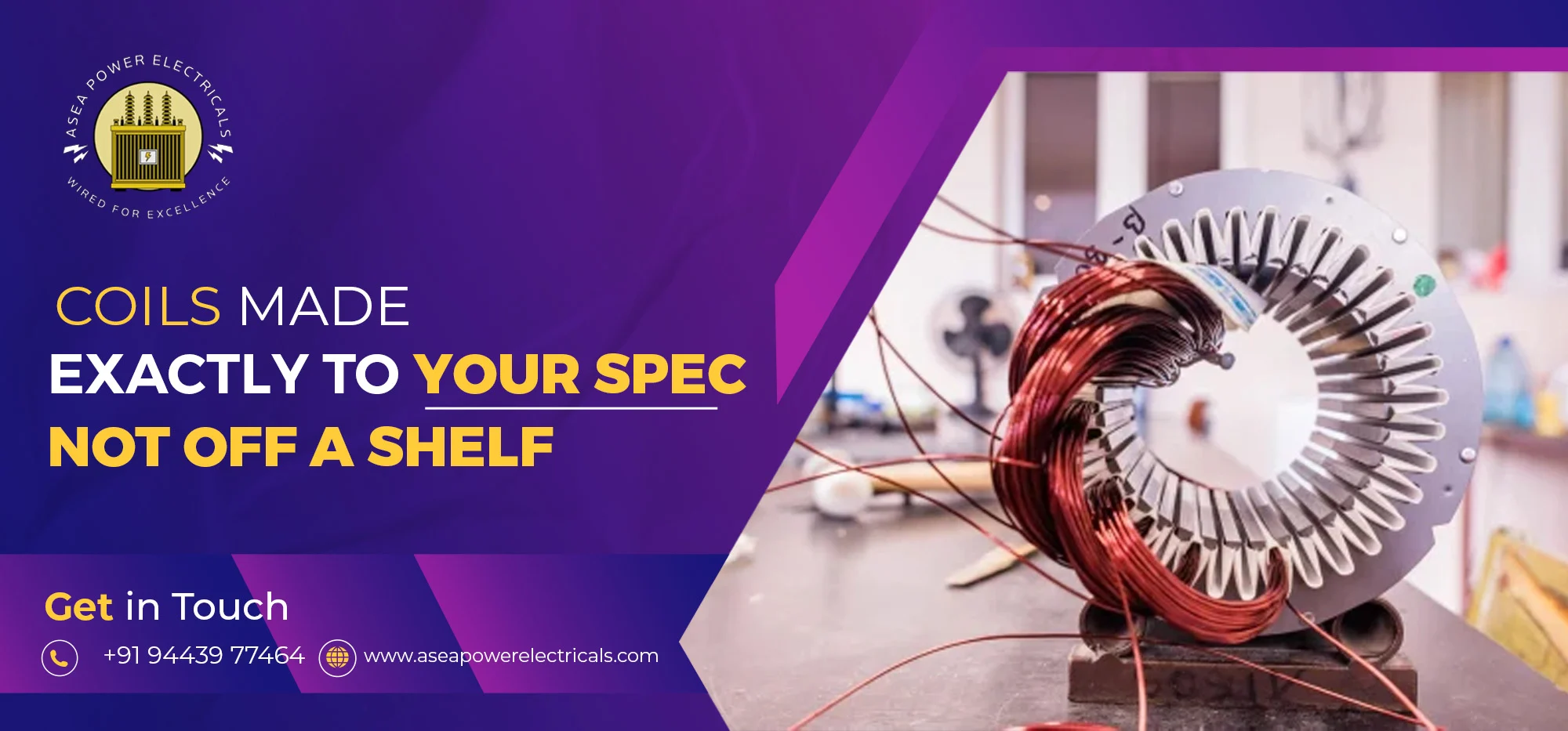
Rewinding — replacing the transformer's electrical windings — becomes necessary when winding insulation has degraded to the point where it can no longer safely handle the operating voltage, or when a fault has caused direct physical damage to the windings themselves. Rewinding is a significant repair that can extend the transformer's service life by another 20 or more years, making it economically preferable to full replacement in many cases. It can often be avoided or deferred through timely preventive maintenance that keeps insulation in good condition. When rewinding is genuinely required, Asea Power Electricals carries out expert coil rewinding using high-quality materials to restore full transformer performance.
Q5. Can Asea Power Electricals help with transformer specification and selection for a new industrial project?
Yes. Asea Power Electricals provides technical consultation for new transformer installations, covering load analysis, voltage ratio and impedance specification, cooling system selection, protection equipment requirements, and site preparation guidance. Getting the specification right from the start — matched to the actual load profile, the site environment, and the facility's future growth plans — is one of the most effective ways to ensure a long, trouble-free service life. Contact the team at +91 94439 77464 to discuss your project requirements.