

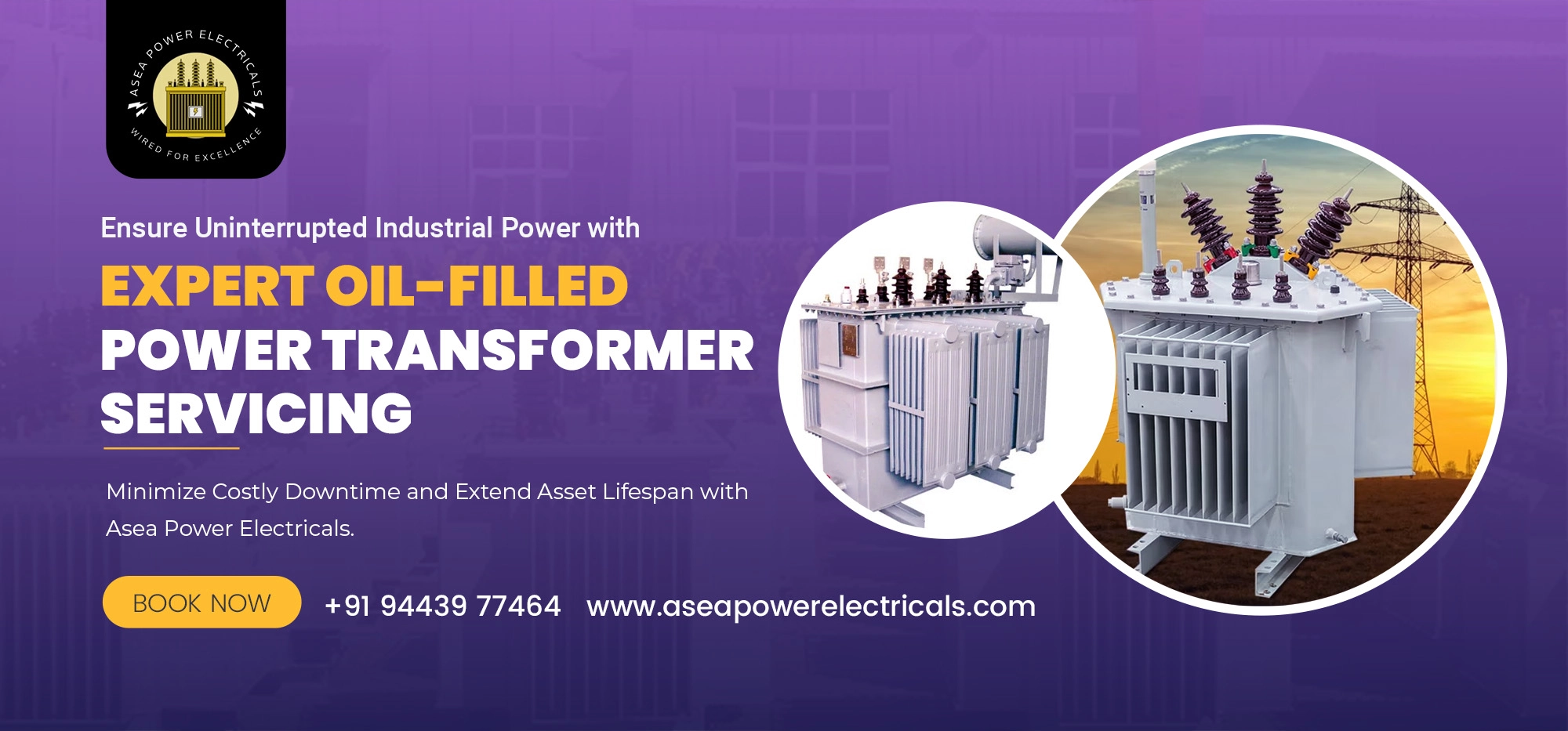
In heavy manufacturing, mining, chemical processing, and large-scale industrial infrastructure, power continuity is the lifeblood of daily operations. A sudden drop in electrical stability doesn't just stop production—it can cause millions of dollars in equipment damage and lost revenue. At the absolute heart of this power distribution network stands a critical asset: the high-voltage oil-filled power transformer.
These massive machines operate continuously under extreme thermal and electrical stress. Over time, moisture, heat, and internal electrical transients degrade the insulation, threatening the integrity of the entire system. To prevent catastrophic grid failures, industrial operators require more than standard electrical maintenance; we require master-level engineering care. Asea Power Electricals has earned its reputation as the premier industry authority, providing specialized, high-fidelity servicing and diagnostic solutions that keep heavy industries powered safely and reliably.
Why Choose Asea Power Electricals for Your Oil-Filled Power Transformer Needs?
Servicing high-voltage energy infrastructure requires a rare mix of specialized laboratory diagnostics, field-proven engineering, and advanced technical machinery. You cannot rely on general electrical contractors when managing assets that operate at sub-station capacities.
Global industrial plants and local manufacturing facilities consistently choose Asea Power Electricals to handle every stage of our oil-filled power transformer lifecycle because of our uncompromising technical benchmarks:
1. Advanced Dissolved Gas Analysis (DGA) and Oil Diagnostics
The internal health of a transformer is written directly in its insulating oil. Our servicing methodology starts with precision fluid sampling under strict laboratory controls. By utilizing advanced Dissolved Gas Analysis, we can detect microscopic traces of methane, acetylene, and carbon oxides. This allows us to identify hidden internal faults, such as localized hotspots, partial discharges, or arcing, long before we cause a catastrophic breakdown.
2. High-Vacuum Oil Filtration and Dehydration
Moisture and particulate contamination are the greatest enemies of transformer dielectric strength. Asea Power Electricals deploys state-of-the-art, high-vacuum oil purification plants directly to your facility. Our process heats, filters, and degasses the insulating oil under a deep vacuum, dropping moisture levels below 10 ppm and raising the dielectric breakdown voltage back to pristine OEM standards.
3. Comprehensive On-Site Overhauling and Component Upgrades
From sealing stubborn oil leaks with high-grade Viton gaskets to repairing or replacing aging On-Load Tap Changers (OLTC), our field engineers handle complex mechanical overhauls right on your factory floor. We ensure every single radiator panel, bushing, and protection relay is thoroughly cleaned, tested, and calibrated for peak performance.
The Deep Engineering Science Behind Oil-Insulated Power Systems
To understand why large-scale industrial plants prioritize specialized care, it helps to look at the unique thermodynamic and insulation challenges inherent to high-voltage equipment design.
The Dual Role of Insulating Fluid
Unlike dry-type units that rely on natural air cooling, an oil-filled power transformer utilizes specialized mineral oil or synthetic esters to perform two critical tasks simultaneously: dielectric insulation and thermal dissipation. The oil fills every microscopic void between the copper windings, preventing electrical arcing across high-voltage gaps. Simultaneously, it absorbs the intense heat generated by core losses and transfers it to external radiator fins. If this oil becomes oxidized or contaminated, its cooling and insulating capabilities plummet, placing the entire facility at immense risk.
Combating Cellulose Insulation Degradation
While the oil can be filtered and purified, the solid cellulose paper wrapped around the internal copper windings cannot be easily replaced. Moisture and heat act as catalysts for paper degradation, permanently shortening the operational lifespan of your asset. Our preventive maintenance protocols focus heavily on removing moisture from both the fluid and solid insulation layers, effectively freezing the aging process of your equipment and maximizing your long-term return on investment.
Strict Safety Compliance and Pre-Commissioning Testing Protocols
A high-voltage asset cannot be returned to service on guesswork. At Asea Power Electricals, our field service teams subject every serviced unit to a meticulous battery of electrical validation tests that align with international standards.
Our comprehensive field testing includes:
- Insulation Resistance (Megger) & Polarization Index (PI): Verifying the ultimate dry condition and health of the winding insulation.
- Transformer Turns Ratio (TTR) & Vector Group Verification: Ensuring perfect voltage regulation across all tap positions.
- Winding Resistance Measurements: Detecting loose internal connections, broken strands, or contact degradation in the tap changer.
- Tan Delta / Power Factor Testing: Measuring the dielectric dissipation factor to accurately quantify overall insulation aging.
Safeguard Your Industrial Power Backbone Today
Relying on reactive, breakdown-only maintenance for your sub-station equipment is a high-risk gamble that leads to unpredictable downtime, massive repair costs, and severe safety hazards. Your facility deserves an energy infrastructure that operates with absolute predictability and peak efficiency.
Partner with the high-voltage engineering specialists who refuse to compromise on quality. Contact Asea Power Electricals today to schedule an expert diagnostic audit or customized service plan for your oil-filled power transformer, and secure a rock-solid foundation for your industrial future.
Frequently Asked Questions
1. How often should a high-voltage oil-filled power transformer undergo routine servicing?
For heavy industrial applications, we highly recommend conducting visual inspections and basic oil level checks monthly. Complete laboratory oil diagnostics, including Dissolved Gas Analysis (DGA) and dielectric breakdown testing, should be performed at least once a year to catch internal insulation degradation early.
2. Why is moisture so dangerous inside an oil-filled power transformer system?
Moisture drastically lowers the dielectric strength of the insulating oil, making internal flashovers and short circuits much more likely. Furthermore, moisture accelerates the permanent thermal decomposition of the internal cellulose paper insulation, which can cause irreparable core damage and premature equipment failure.
3. Can Asea Power Electricals fix active oil leaks during an oil-filled power transformer service?
Yes, absolutely. Our field service engineering teams specialize in locating and repairing structural oil leaks on-site. We replace worn-out, degraded seals and cork gaskets with premium-grade, chemically resistant Viton or RC60 synthetic rubber gaskets to ensure a perfectly airtight, long-lasting seal.
4. What is the benefit of high-vacuum oil filtration for an industrial oil-filled power transformer?
High-vacuum filtration removes dissolved moisture, trapped gases, and suspended carbon soot particles from the fluid. This process restores the oil's dielectric breakdown voltage, improves its heat dissipation efficiency, and actively cleans the internal core and winding assemblies without requiring a costly oil replacement.
5. What diagnostic tests are included in your oil-filled power transformer maintenance program?
Our comprehensive servicing program covers a complete suite of advanced diagnostic tests. This includes winding resistance measurements, transformer turns ratio (TTR) testing, insulation resistance testing, Tan Delta insulation analysis, and complete laboratory DGA analysis to ensure your asset meets all safety regulations before commissioning.