

Power transformers are the heavy lifters of your electrical distribution system, built to last anywhere from 25 to 40 years. However, that impressive lifespan isn't guaranteed. In demanding environments, a transformer's actual working life depends entirely on how well its insulation system is maintained.
Insulating oil serves a dual purpose: it dissipates intense heat away from the core and provides critical dielectric strength to prevent internal electrical arcs. When that oil leaks or becomes polluted, the internal temperature spikes, leading to irreversible damage to the solid cellulose paper wrapping the copper windings.
By executing a proactive strategy combining regular vacuum oil purification with expert transformer oil leak services in Chennai, industrial facilities can effectively stop insulation aging in its tracks and safely extend our asset life by more than a decade.
The Root Causes of Insulation Degradation
Transformer breakdown rarely happens overnight; it is almost always driven by three progressive internal enemies: moisture, acid, and oil loss.
1. Water Accumulation and Dielectric Drop
Moisture enters a transformer either through atmosphere exposure via old, cracked rubber gaskets or as a natural byproduct of cellulose paper degradation. Clean transformer oil can hold a small amount of dissolved water, but once moisture exceeds 30 parts per million (ppm), the Breakdown Voltage (BDV) drops significantly. Lower BDV means the oil loses its ability to withstand high electrical voltage, leading to high-risk partial discharges and catastrophic short circuits.
2. Acid and Sludge Formation
As a transformer operates under heavy load, high temperatures combined with dissolved oxygen trigger an oxidation process within the mineral oil. This chemical reaction creates organic acids. These acids attack the solid paper insulation, accelerating its mechanical breakdown. If left untreated, the acid transforms into a thick, gooey sludge that settles on the cooling radiator fins, blocking heat dissipation and causing the unit to run perpetually hot.
3. The Dangerous Cycle of Oil Leaks
A minor seep at a valve or bushing flange might seem like a simple housekeeping issue, but it represents a structural breach. As oil escapes, the internal oil level drops, exposing core components to air. Worse, when the transformer cools down during low-load periods, it draws external air and high humidity directly inside through those very same leak pathways, rapidly accelerating internal moisture contamination.
Restoring Asset Integrity: The Dual Maintenance Approach
Maximizing the operating life of your high-voltage equipment requires addressing both fluid quality and structural sealing at the same time.
High-Vacuum On-Line Oil Filtration
Routine filtration removes physical impurities, dissolved gasses, and water without draining the unit. Specialized mobile plants heat the mineral oil and pass it through a high-vacuum degassing chamber. This process drops moisture levels back down below 15 ppm and elevates the dielectric breakdown voltage to a safe, robust standard of 60kV or higher.
Specialized Transformer Oil Leak Services in Chennai
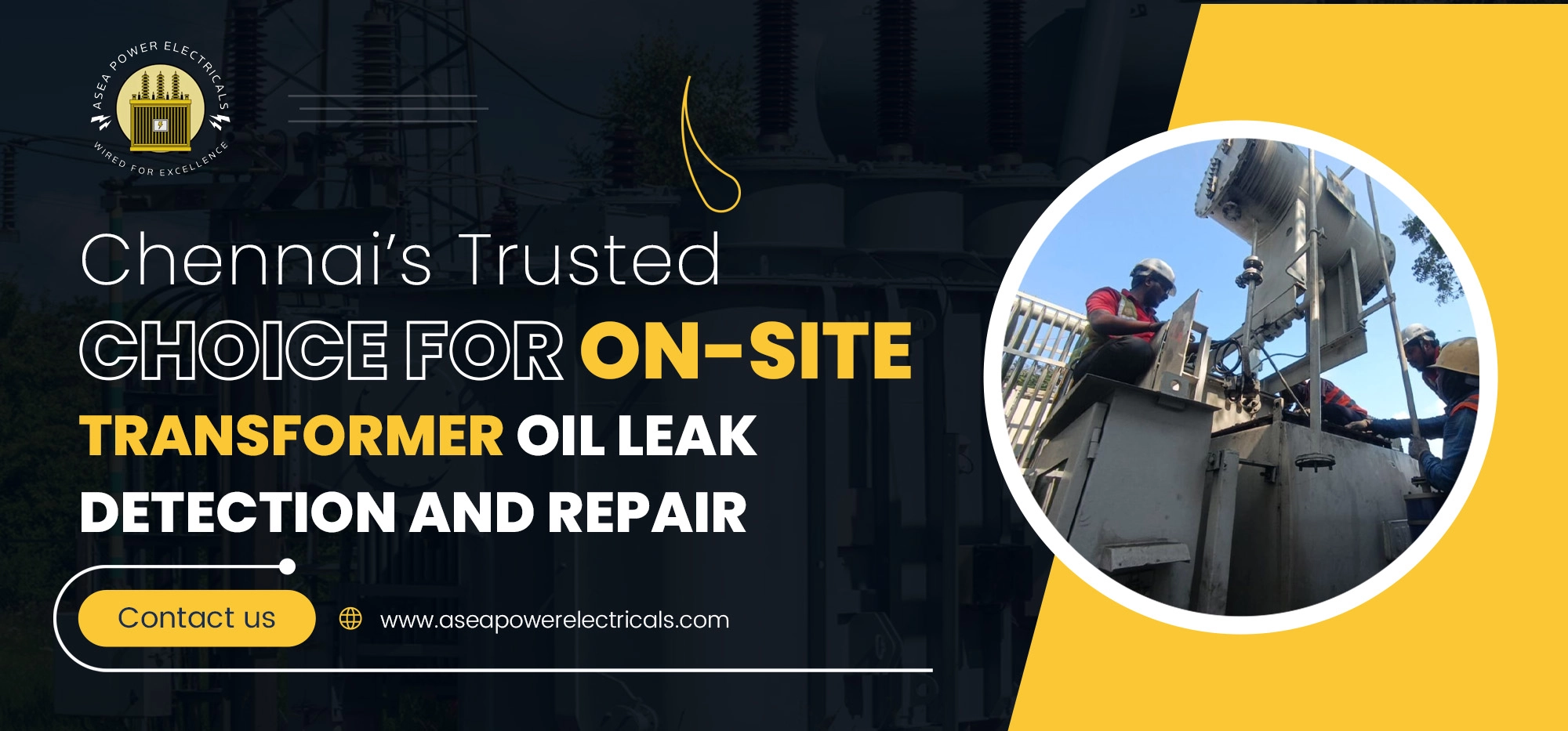
Rather than resorting to traditional, disruptive methods that require completely draining thousands of liters of oil just to change a minor seal, modern engineering utilizes advanced polymer and epoxy systems. High-performance, surface-tolerant compounds (such as solid ceramic or titanium-reinforced epoxies) are applied directly to active leak points. These compounds adhere firmly to oil-wet metal surfaces under pressure, permanently stopping leaks around radiator fins, welded seams, and bushing bases with zero equipment dismantling.
Why Choose Asea Power Electricals for the Transformer Oil Leak Services in Chennai
When dealing with high-voltage industrial assets, precision and technical expertise are non-negotiable. Asea Power Electricals stands as the premier engineering partner in Tamil Nadu, delivering specialized, non-disruptive maintenance solutions that safeguard your power continuity.
- In-Situ, Zero-Drain Leak Arresting: We specialize in online leak correction using advanced, surface-tolerant polymers. Our team seals active leaks at gaskets, valves, and weld seams under pressure, eliminating the expensive, time-consuming need to drain, store, and refill the oil.
- Advanced High-Vacuum Purification Plants: Our mobile filtration units utilize multi-stage micro-filtration and deep-vacuum dehydration to thoroughly eliminate moisture, sediment, and dissolved combustible gases, restoring your oil's dielectric strength to factory specifications.
- Comprehensive Testing & Diagnostics: We do not guess; we measure. Every service is backed by rigorous pre- and post-filtration testing, including Breakdown Voltage (BDV) analysis, moisture content measurement, and acidity tracking.
- Experienced Engineering Team: Our certified technicians understand the distinct environmental challenges of the Chennai region—such as high ambient humidity and corrosive coastal air—ensuring that all applied seals and gaskets are engineered to withstand local conditions over the long term.
- Minimized Operational Downtime: By utilizing cutting-edge online repair technologies, we fix structural faults and purify oil with minimal to no disruption to your plant's power availability, saving you millions in lost production time.
FAQ: Transformer Maintenance Insights
1. When should I book professional transformer oil leak services in Chennai?
You should schedule repair services the moment you notice any oil weeping, pooling, or staining around gaskets, radiator flanges, or bushings. In Chennai's high-humidity and high-temperature environment, even a minor oil leak acts as a vacuum pathway that pulls moisture into the tank during thermal cooling, accelerating insulation breakdown. Routine physical inspections should be conducted monthly, supplemented by annual fluid testing.
2. How much life extension can regular oil filtration actually provide?
Consistent oil purification can add 10 to 15 years of reliable service to an industrial transformer. By keeping water content low (under 15 ppm) and removing harmful acids, you directly slow down the aging of the internal cellulose paper insulation, preventing unexpected dielectric breakdown.
3. Can an active oil leak be fixed while the transformer is online?
Yes, using modern industrial methods, many leaks can be arrested while the unit remains pressurized. Specialized technicians apply high-adhesion, oil-tolerant epoxy putties directly over structural leaks on weld seams or pipe joints, curing them in place without requiring an extensive system shutdown or oil drainage.
4. What are the key indicators that transformer oil needs immediate purification?
Your oil requires rapid filtration if diagnostic tests show a Breakdown Voltage (BDV) dropping below 30kV, moisture levels climbing above 30 ppm, or an acidity level exceeding 0.2 mg KOH/g. A noticeable darkening of the fluid or the presence of suspended carbon particulates also indicates advanced degradation.
5. Why is regular oil maintenance more cost-effective than replacing a unit?
Replacing a medium-sized industrial power transformer requires a massive capital expense, long manufacturer lead times, and extensive system downtime. In contrast, predictive oil filtration and proactive leak sealing cost a tiny fraction of a replacement asset while effectively doubling the operational lifespan of your existing infrastructure.